
CHANGE IS CREATING CONDITIONS FOR GROWTH
AIM Year In Review and Predictions for 2026
AIM reflects on 2025, a year filled with product and standards development that make products easier to use within IoT, DPP, AI and other systems and looks ahead to 2026, an industry poised for tremendous growth, driven by technological advancements, the expansion of automation, and the increasing demand for data-driven insights.
The Year in Review is available both as a downloadable PDF and an online interactive version, ensuring greater accessibility and convenience for industry stakeholders. Special thanks to our member and partner sponsors for their support.

Watch our Year in Review Webinar Recap
Explore Our Resources
Gold Sponsors

Anantics® is a leading IoT solutions provider and systems integrator, offering end-to-end solutions including software for web and mobile platforms. We integrate sensors and create scalable, secure, and efficient systems that turn data from connected devices into actionable insights. Our Real-Time Location Systems include options of RFID, BLE, UWB, LoRaWAN and GPS.

Avery Dennison is a global materials science and digital identification solutions company that provides a wide range of branding and information solutions that optimize labor and supply chain efficiency, reduce waste, advance sustainability, circularity and transparency, and better connect brands and consumers.

Aware Innovations is a software and technology company providing a unique, technology agnostic, IoT solution for tracking and managing items and assets as well as inventory management. We are experts in all automatic identification technologies including: bar codes, RFID, BLE, GPS, Wi-Fi, LoRa, and many others.

BlueStar is the leading global distributor of solutions-based Digital Identification, Mobility, Point-of-Sale, RFID, IoT, AI, M2M, Digital Signage, Networking, Connectivity, and Security technologies. BlueStar sells exclusively to Value-Added Resellers (VARs), Integrators, and Managed Service Providers (MSPs) to provide complete, creative solutions in collaboration with industry-leading hardware and software vendors.

GS1 is a neutral, global collaboration platform that brings industry leaders, government, regulators, academia, and associations together to develop standards-based solutions to address the challenges of data exchange. Our scale and reach—local Member Organizations in 120 countries, over two million user companies and 10 billion transactions every day—helps ensure that there is a common language of business across the globe.

Honeywell is an integrated operating company serving a broad range of industries and geographies around the world. Our business is aligned with three powerful megatrends – automation, the future of aviation and energy transition – underpinned by our Honeywell Accelerator operating system and Honeywell Forge IoT platform. As a trusted partner, we help organizations solve the world’s toughest, most
complex challenges, providing actionable solutions and innovations through our Aerospace Technologies, Industrial Automation, Building Automation and Energy and Sustainability Solutions business segments that help make the world smarter, safer and more sustainable.

Identiv’s RFID- and BLE-enabled IoT solutions create digital identities for physical objects, enhancing global connectivity for businesses, people, and the planet. Its solutions, integrated into over 1.5 billion applications worldwide, drive innovation across healthcare, consumer electronics, luxury goods, smart packaging, and more.

Lyngsoe Systems, specializes in delivering cutting-edge solutions to transform logistics operations across industries. With decades of experience in RFID technology, asset tracking, and real-time visibility, we empower businesses to optimize workflows, reduce costs, and achieve unparalleled efficiency.

OMRON Automation is a global leader in automation technology. At our core, we develop next-generation technologies that improve efficiency, productivity, and safety on the factory floor. We offer a comprehensive portfolio that includes sensing, control, safety, vision, and motion.

ScanSource, Inc. (NASDAQ: SCSC) is a leading hybrid distributor connecting devices to the cloud and accelerating growth for customers across hardware, software as a service (SaaS), connectivity and cloud. ScanSource enables customers to deliver solutions for their end users to address changing buying and consumption patterns. ScanSource sells through multiple, specialized routes-to-market with hardware, SaaS, connectivity and cloud services offerings from the world’s leading suppliers of point-of-sale (POS), payments, barcode, physical security, unified communications and collaboration, telecom and cloud services.

Seagull Software (includes Mojix and BarTender brands) is a global leader in real-time, item-level visibility and label management solutions, dedicated to powering the world’s most complex supply chains with innovative tools for traceability, authentication, and automated inventory management. Headquartered in Redmond, Washington, with offices across the United States, Europe, and Asia, Seagull empowers businesses worldwide to keep their products moving, traceable, and safe.

SICK is one of the world’s leading manufacturers of sensors, safety systems, machine vision, encoders, and automatic identification products for industrial applications. With more than 3,500 patents, SICK continues to lead the industry in new product innovations.

SpotSee is a global leader in condition-monitoring sensors for life sciences, pharmaceuticals, and healthcare, as well as industrial, logistics, electronics, and energy sectors. Its impact and temperature solutions help organizations protect products, reduce damage, improve quality, and gain greater visibility across the global supply chain.

Trustwell is on a mission to change the food industry. Combining FoodLogiQ’s supply chain management software with Genesis’ nutritional analysis and label development solution, the Trustwell Connect platform creates the food industry’s only full-scale solution connecting product development and regulatory-compliant labeling with supplier compliance, enhanced traceability, and automated recall management.

TSC Auto ID is a global leader in AIDC solutions, advancing data identification through innovative technologies and devices. Founded in 1991, TSC offers a full range of AIDC products, from consumables and thermal printers to enterprise
mobile computers, meeting diverse customer needs worldwide.

Zebra helps organizations monitor, anticipate, and accelerate workflows by empowering their frontline and ensuring that everyone and everything is visible, connected and fully optimized. Our award-winning portfolio spans software to innovations in robotics, machine vision, automation and digital
decisioning, all backed by a +50-year legacy in scanning, track-and-trace and mobile computing solutions.
Silver Sponsors

Cognex vision helps companies improve product quality, eliminate production errors, lower manufacturing costs, and exceed consumer expectations for high quality products at an affordable price. Typical applications for machine vision include detecting defects, monitoring production lines, guiding assembly robots, and tracking, sorting and identifying parts.
Our EASYLABEL® software is used globally to create everything from simple labels to complex barcode and RFID labels. It easily integrates into your systems and is backed by industry-leading support. EASYLABEL drives our H-, V-, and T-Series printers, plus hundreds of printer models from other leading manufacturers.

Hana RFID, a leader in the identification/IoT industry, offers an array of RFID products to the unique demands of our customers. Our products serve as crucial semi-finished product for authenticating histories, streamlining tracking and inventory management, and enhancing consumer interactions in ever growing markets.
TEKLYNX helps supply chains work better. Today, more than 750,000 companies in over 170 countries trust TEKLYNX barcode and RFID label design products and the people behind its solutions to make labeling operations efficient, accurate, secure, and industry compliant. Barcode Better™ with
TEKLYNX.
Bronze Sponsors




Industry Groups Overview
Mastermind Groups


Awards and Recognition
Lifetime Achievement Award
Paul Bergé International Business Development Award
Ted williams Award
Clive Hohberger Technology Award
Allan Gilligan Award
Bert Moore Excellence in Journalism Award
Case Study Competition Winners
AIM Chapters
At AIM Global, we are dedicated to advancing the field of automated data capture through innovation, education, and community engagement. Our vision is to create a world where technology seamlessly integrates into everyday life, making processes more efficient and data more accessible. Join us as we lead the way in setting standards and fostering collaboration across the industry.






AIM's Outlook and Predictions
At AIM Global, we are dedicated to advancing the field of automated data capture through innovation, education, and community engagement. Our vision is to create a world where technology seamlessly integrates into everyday life, making processes more efficient and data more accessible. Join us as we lead the way in setting standards and fostering collaboration across the industry.
Contact Us

Advocacy
For more than 50 years, AIM has been a steadfast, non-partisan advocate for the effective, safe, and interoperable use of AIDC—championing open standards, practical compliance pathways, and policies that let barcodes, RFID, smart labels, and connected solutions deliver trusted data at scale. In 2025, AIM’s advocacy centered on Digital Product Passport alignment, spectrum protection for RAIN RFID, and smart, standards-based consumer labeling.
Digital Product Passport (DPP) – Standards Alignment & Security
(prEN 18219: Unique Identifiers; prEN 18220: Data Carriers)
- Anchored identifiers in global rules: Urged editors to ground DPP identifiers in ISO/IEC 15459 common rules and registration procedures, ensuring uniqueness and cross-scheme interoperability across supply chains.
- Web compatibility first: Recommended that unique IDs be URLs or transformable to URLs; if DIDs are permitted, constrain to approaches (e.g., did:web) that preserve web resolution and user access without vendor lock-in.
- Quishing/QR-jacking safeguards: Proposed mandatory HTTPS/TLS (RFC 2818), authenticated endpoints, and “no insecure redirects” to mitigate phishing and redirection attacks on 2D codes.
- Complete normative references: Asked German Institute for Standards (DIN) and German Commission for Electrical, Electronic & Information Technologies (DKE) to include missing references (e.g., GS1 Digital Link URI Syntax, ISO/IEC 18975, 15415/15416 print quality, 15424 symbology identifiers, EPC TDS) to avoid ambiguity in conformance and decoding.
- Clarity on carriers & quality: Specified that Data Matrix and QR Codes must follow their ISO specs with minimum print quality grades aligned to environment (retail/red-light POS vs. logistics/smart devices).
- RFID encoding guidance: Documented how ISO/IEC 18000-63 (UHF) tags may store the identifier and URL across memory banks, using ISO/IEC 15961/15962 for URL encoding; urged write protection for persistent DPP links.
- Decoding practicality: Noted that some identifiers (e.g., EPC, DID) reasonably require an app to resolve URI>URL on phones/industrial readers; standards should explicitly allow this.
- Broader carrier options where needed: Recommended acknowledging digital watermarks (with item-level serialization, error correction, and OS/industrial scanner support) for harsh environments or recycling streams, used in addition to 2D/RFID when appropriate.
- Editorial clean-ups for implementers: Requested consistent “QR Code” naming, reserved demo domains (e.g., example.com), and corrected tables/annexes to prevent misinterpretation.
Smart Consumer Labeling – Alcohol and Tobacco Tax (TTB) “Alcohol Facts” Proposal
United States Regulations (Docket TTB-2025-0002; Notice No. 237)
- Support for standardized transparency: Endorsed the goal of accurate, consistent consumer information, urging adoption of internationally recognized AIDC standards so labels are readable by people and interoperable with digital systems.
- Standards recommended: Referenced ISO/IEC 15459 (unique IDs), ISO/IEC 18004 (QR Code), ISO/IEC 30161-1 (IoT data exchange), plus GS1 General Specifications, GS1 DataMatrix, and GS1 Digital Link for harmonized encoding and web resolution.
- Physical + digital approach: Advised print + machine-readable carriers (e.g., QR with Digital Link) to deliver extended content (allergens, languages, sustainability) while aligning with retail/e-commerce infrastructure.
- Offer to assist: AIM offered technical guidance on carrier selection, data encoding, and integration of physical labels with digital product data to reduce compliance cost and error rates.
Protecting RAIN RFID in the U.S. Industrial, Scientific, Medical (ISM) Band – Oppose the NextNav Petition
(Federal Communications Commission (FCC) proceeding on proposed 902–928 MHz realignment)
- Why it matters: NextNav’s request to repurpose significant portions of 902–928 MHz threatens mutual interference and could force
shutdowns of long-standing RAIN RFID operations that underpin U.S. retail, logistics, healthcare, aviation baggage handling, tire lifecycle, and
more.
- Our action: Coordinated with RAIN Alliance to prepare joint comments/briefings; mobilized AIM members to file with the FCC and brief
congressional committees on socio-economic risk, supply-chain resilience, and conflict with decades of Part 15/EPC Gen2 (ISO/IEC 18000-
63) deployments.
-
What we asked members to do:
-
File FCC comments detailing operational and economic impacts, urging denial of the petition
-
Brief House Energy & Commerce Committee and Senate Commerce Committee staff on industry-wide harm
-
Share customer impact data (e.g., inventory accuracy, waste reduction, safety) to demonstrate public-interest costs
-
Encourage U.S. customers to file comments; non-U.S. firms to engage their governments given global supply-chain effects
-
Consider providing financial support for further coordinated advocacy if required
-
- Context provided to members: Backgrounders summarized prior FCC decisions, Part 15 priority relationships, likely Out of Band (OOB)
emissions and blocking/desense issues at proposed power levels, and sector-specific risk (e.g., retail inventory accuracy, logistics costs,
Food Safety Modernization Act (FSMA) traceability, healthcare medication/asset tracking).
Ongoing Regulatory Monitoring & Member Enablement
- Rapid alerts & templates: Distributed member templates for FCC filings and legislative outreach; maintained running trackers of deadlines
(e.g., Sept 5 comment date) and talking points to lower barriers to participation. - Cross-ecosystem coordination: Engaged with GS1, RAIN Alliance, PMMI, RPA, RSPA, RFCV, and other associations to amplify aligned
positions and avoid duplicative or conflicting guidance. - Education & security posture: Published practical guidance on QR-phishing (“quishing”) defenses, 2D print quality, RFID encoding, and
identifier resolution to help implementers meet evolving policy with robust, real-world engineering.
Industry Publications
How AI, IoT, Robotics, and AIDC Technologies Are Coming Together in Industrial Environments Whitepaper: This whitepaper explores the convergence of cutting-edge technologies like AI, IoT, robotics, and AIDC in industrial settings. It highlights how these innovations are driving automation, improving operational efficiencies, and fostering smarter decision-making. The document also discusses real-world examples and future trends shaping the industry.
QR Code Phishing Awareness Document Designed to address the growing threat of QR code phishing, this document provides essential safety tips for users. It highlights the risks associated with scanning unknown codes and outlines best practices to avoid falling victim to phishing schemes. By adopting these measures, individuals and organizations can improve their digital security.
Understanding Sensors for the Supply Chain Whitepaper:
This whitepaper dives into the different types of sensors utilized in industrial environments, explaining their applications and benefits in supply chain management. It provides practical insights into how sensors contribute to operational efficiency and data accuracy. By understanding these technologies, organizations can make informed decisions about integrating them into their processes.
Guidance for Improving RFID Tag Recycling and Disposal:
This guidance document offers actionable recommendations for enhancing the sustainability of RFID tags. It discusses key considerations for recycling and disposal, addressing environmental concerns related to RFID waste. The resource helps organizations align with sustainability goals while continuing to benefit from RFID technology.
Google ML Kit Vision Awareness Document: This document examines discrepancies between Google’s ML Kit Vision symbols and widely accepted industry standards. It aims to raise awareness of the potential challenges these inconsistencies can create in technology adoption. By identifying and addressing these gaps, the document fosters better alignment between emerging tools and existing frameworks.
RFID FAQ for Retailers Revision: The revised FAQ offers retailers updated insights into implementing RFID technology effectively. It addresses common concerns, such as cost, integration challenges, and ROI, with detailed answers based on industry trends. The guide helps retail businesses maximize the value of RFID while navigating its adoption.
Technical Symbology Committee
Chair: Steve Keddie – GS1 Global
Mission Statement
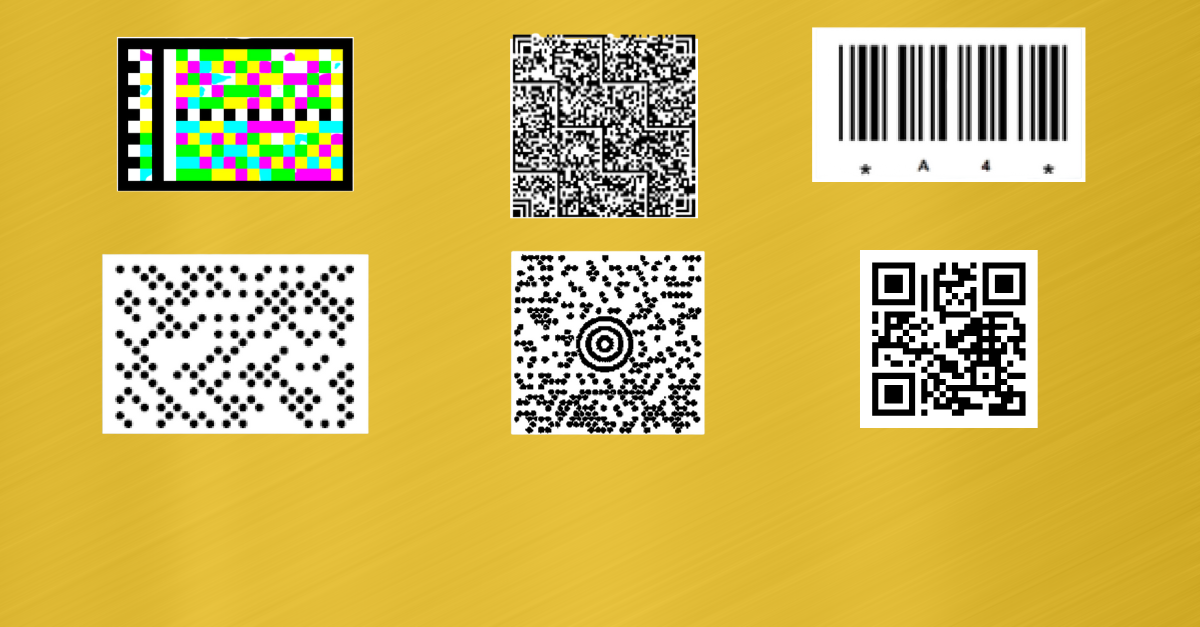
The Technical Symbology Committee (TSC) serves as a global resource
on barcode, 2D symbol, and data encoding methods and standards.
The committee develops and maintains foundational guidance used
worldwide to ensure accurate, readable, and interoperable data exchange
on physical and digital products.
2025 Accomplishments
-
Continued enforcement of Best Practices to Avoid QR Code Phishing guidance
-
Advanced development of content on next-generation 2D barcode print quality standards (ISO/IEC 15415 & 15416 updates) through podcasts, webinars, and additional guidance materials
-
Briefed stakeholders and provided feedback on Barcode Migration and Sunrise 2027 for 2D codes in retail
-
Updated the AIM Symbology Identifier database and reference tools for developers
-
Continued progress of the AIM International Symbology Standard Ultracode through the ISO international standardization process
New Educational Tools and Resources on the AIM Website
AIM’s website aimglobal.org has introduced several new features to better serve members and the AIDC community. These key additions offer dedicated resources designed to educate users on fundamentals and implementation strategies across industries. These updates enhance the website’s role as a central hub for education, collaboration, and innovation.
The RFID.ORG website is a new educational hub designed to provide a foundational understanding of RFID technology. It covers key concepts, benefits, and step-by-step guides for successful implementation across various industries. The platform aims to make RFID technology more understandable and provides practical advice to
businesses and professionals alike.
This is a growing repository showcasing the successes and expertise of AIM’s Industry Groups and our members. It features detailed case studies and whitepapers that highlight real-world applications of AIDC technologies. This area also gives access to AIM’s comprehensive eBooks and other educational resources, offering valuable insights into industry trends and best practices. This centralized collection not only fosters learning but also helps members share their achievements with the broader community.
AIM’s Business Directory serves as a trusted resource for connecting organizations with leading AIDC solution providers. Featuring exclusively AIM members, the directory highlights companies committed to industry best practices and innovation in technologies like barcoding, RFID, IoT, and more. It continues to be a vital tool for those seeking reliable partners to drive their business forward.
News Publications
AIM Insider
This bi-monthly newsletter spotlights industry leaders, groundbreaking AIM initiatives, and the latest industry developments. Each issue offers insights and news on trends shaping the future of data capture.
AIM News
An essential source for announcements that matter in the industry. From new standards to impactful regulatory updates, we cover the topics that influence and shape our industry.
AIM Blog
A source for the latest insights on emerging innovations, industry events, and key developments shaping our community. These posts give expert perspectives keeping readers informed on trends and topics that matter in our ecosystem.
AIM Solutions Showcase
A monthly highlight of the latest advancements and applications from our members. Discover cutting-edge solutions that redefine efficiency, traceability, and connectivity across industries.
Events
AIM Workshops | Fundamentals and Advanced AIDC Knowledge-Base
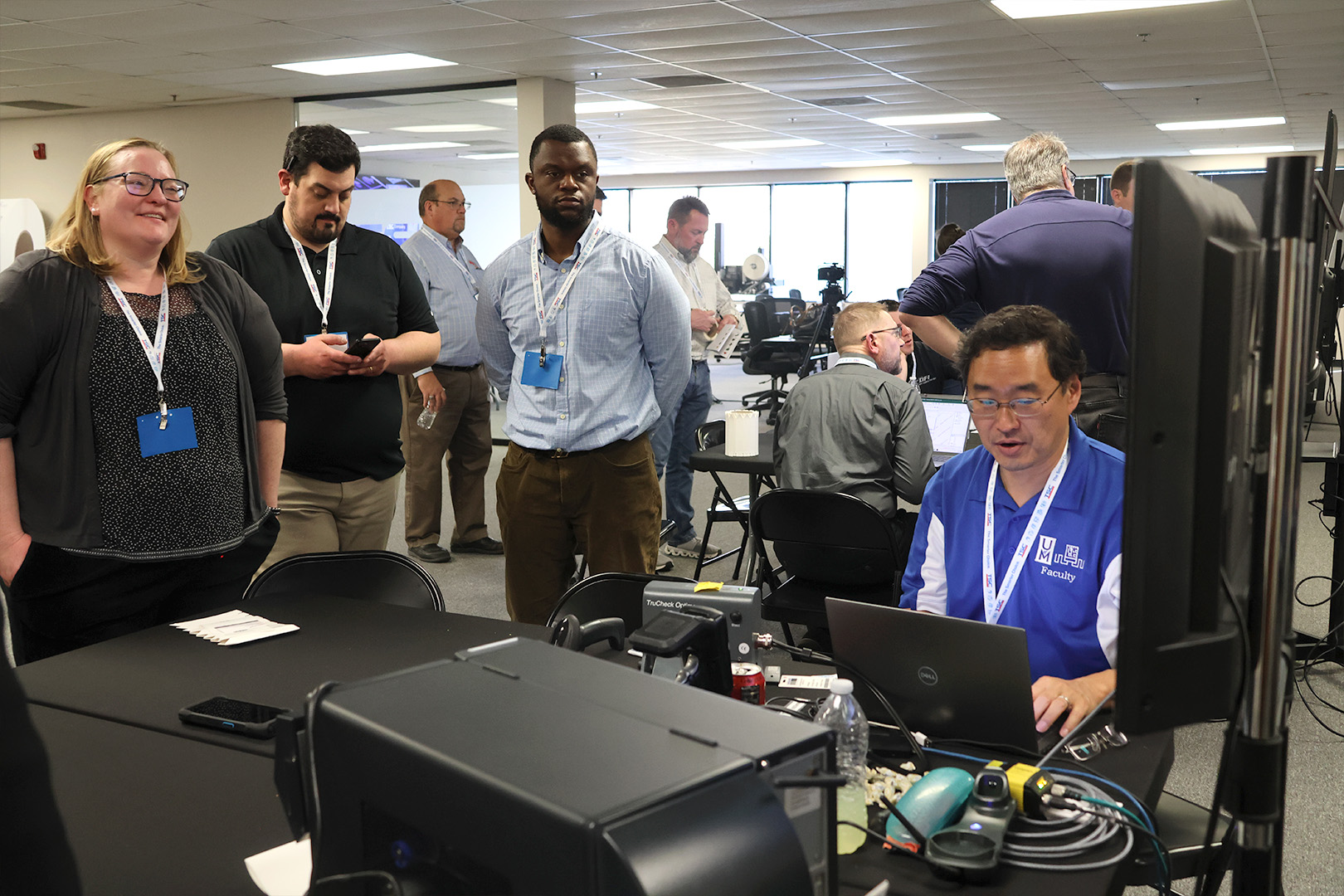
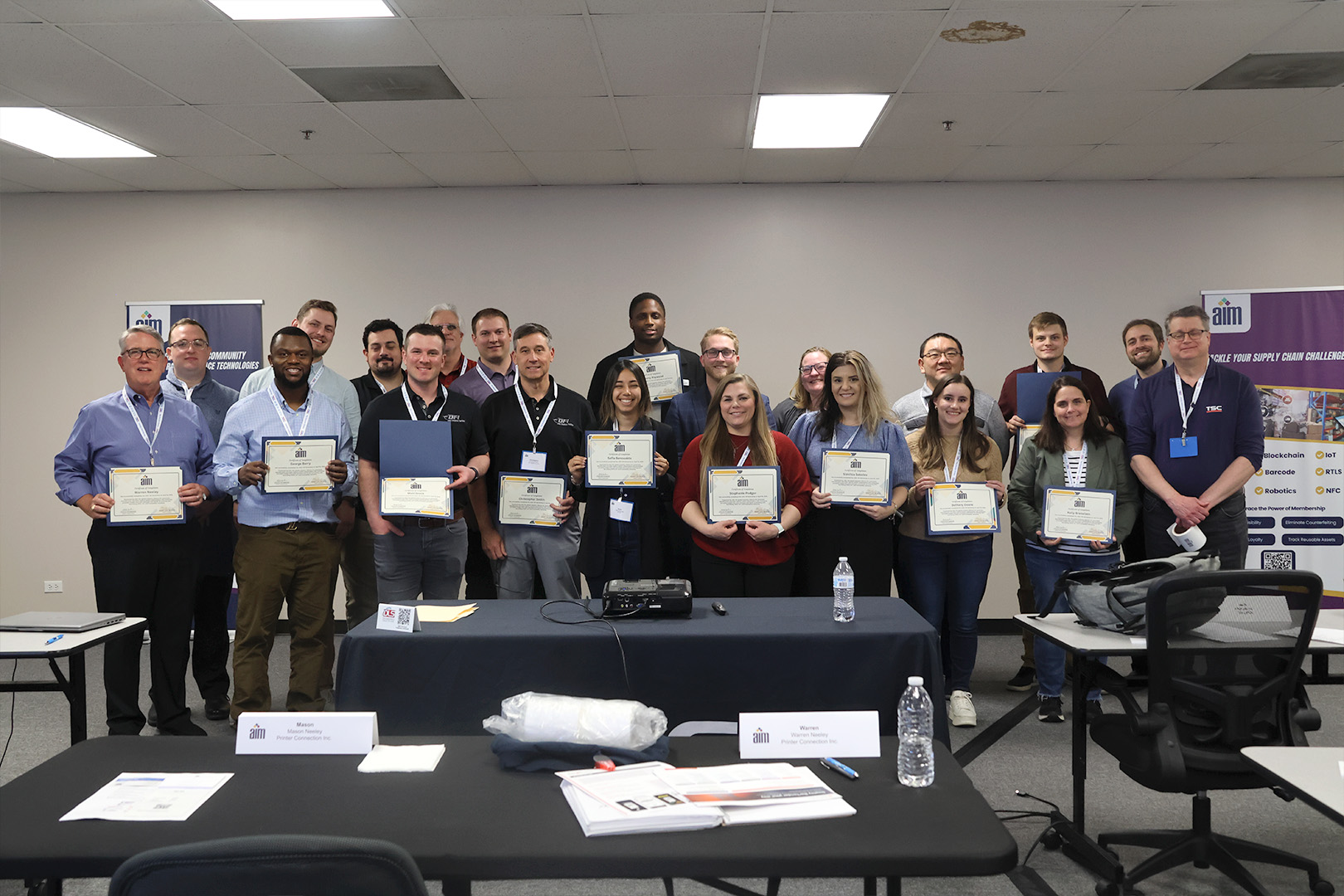
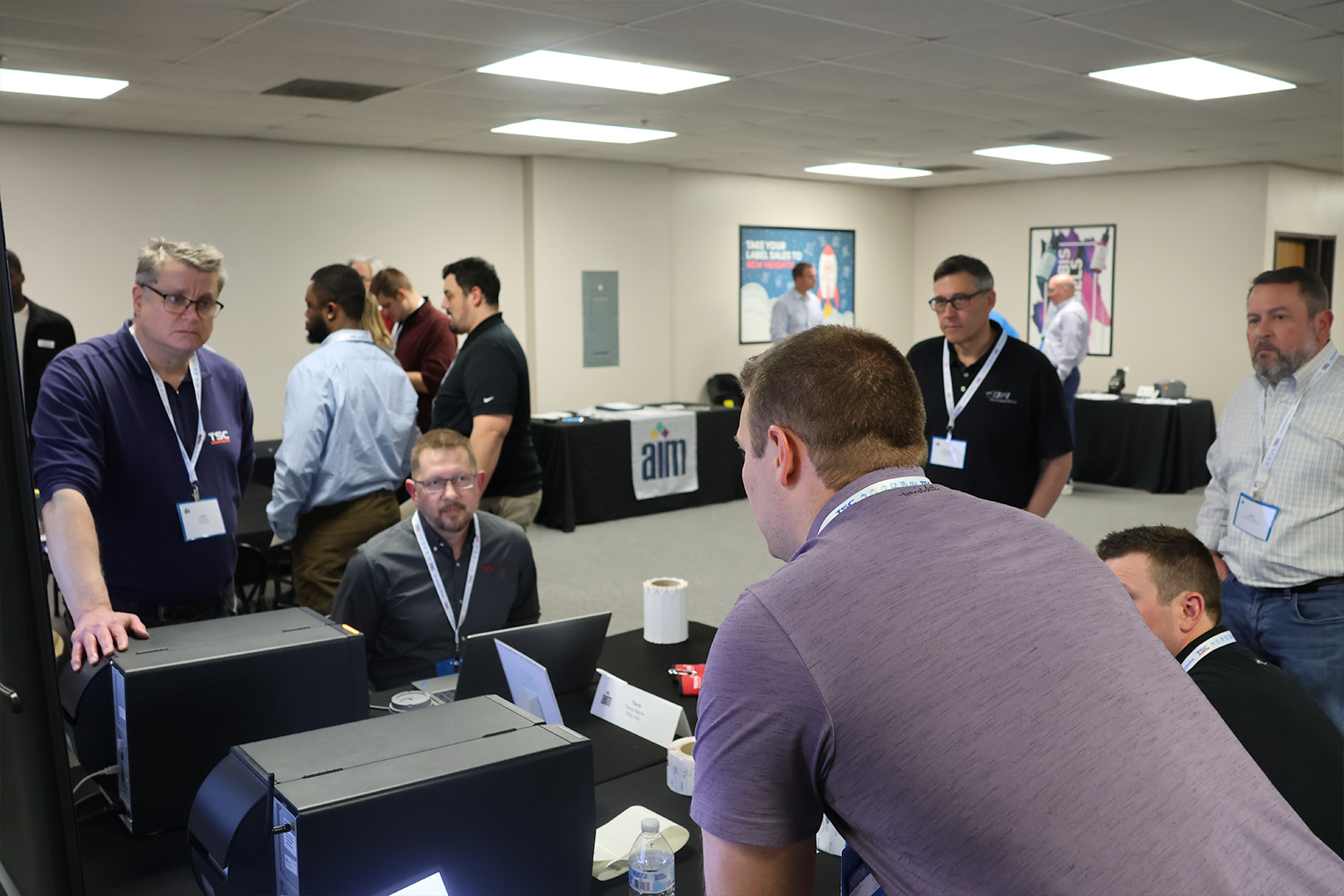
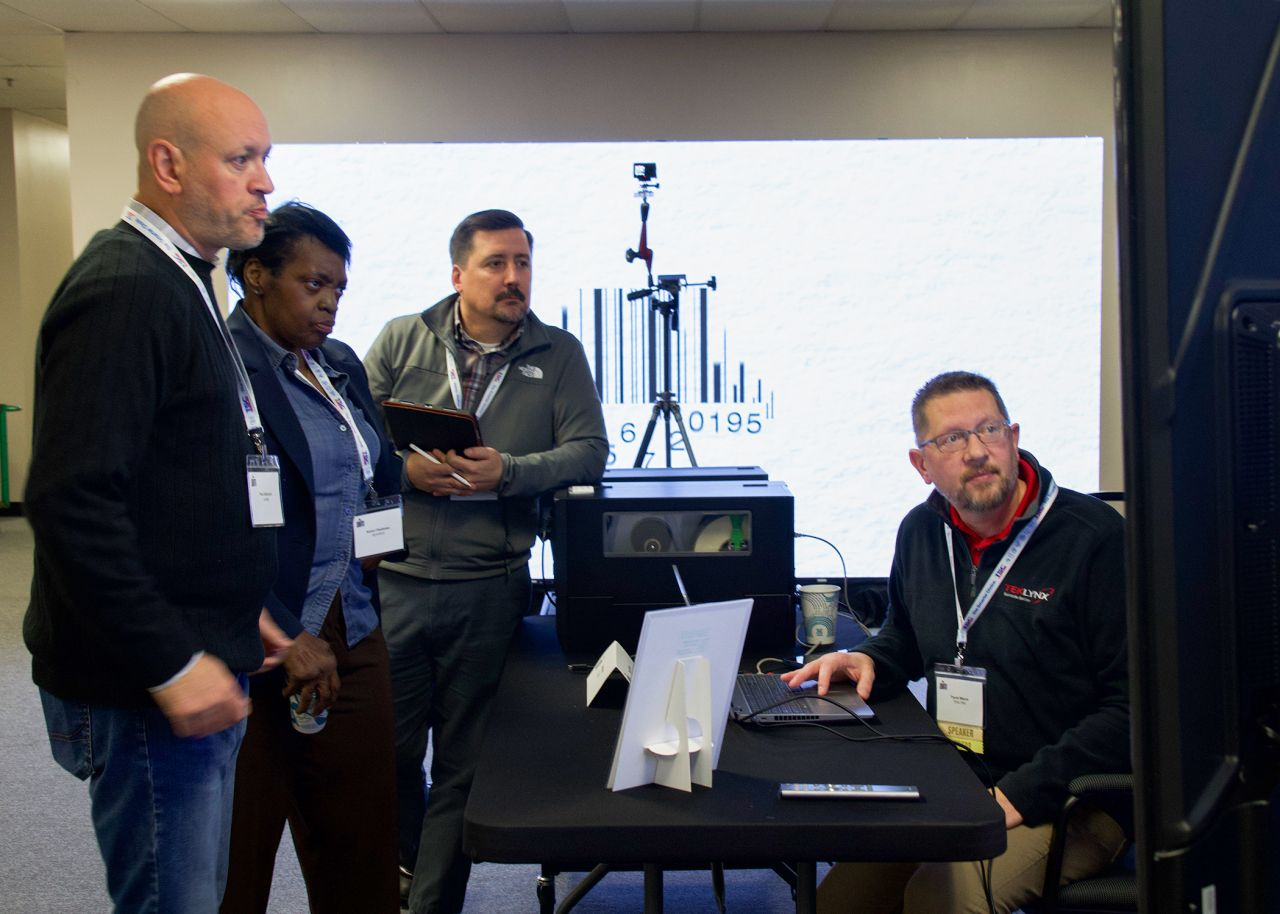
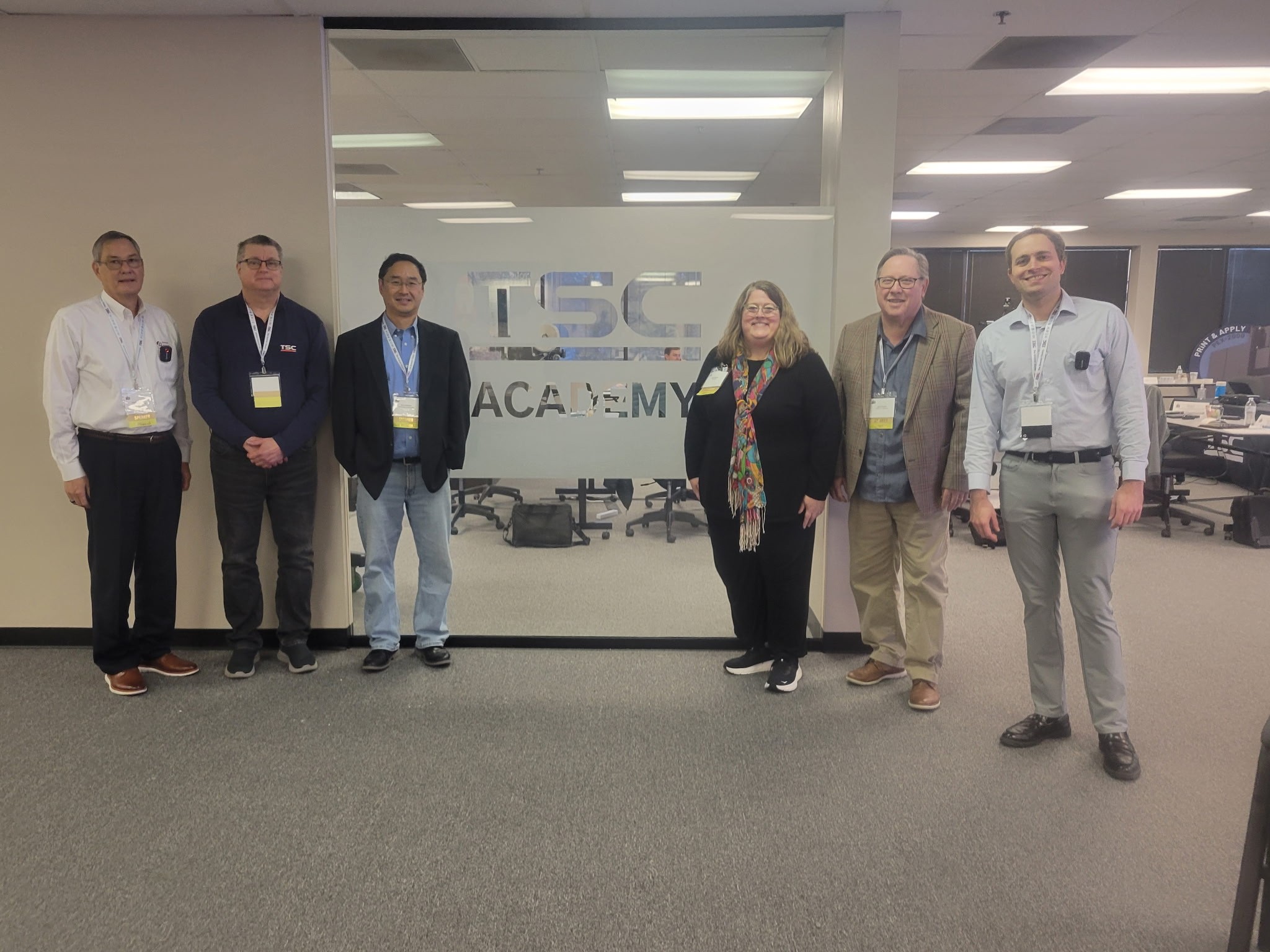
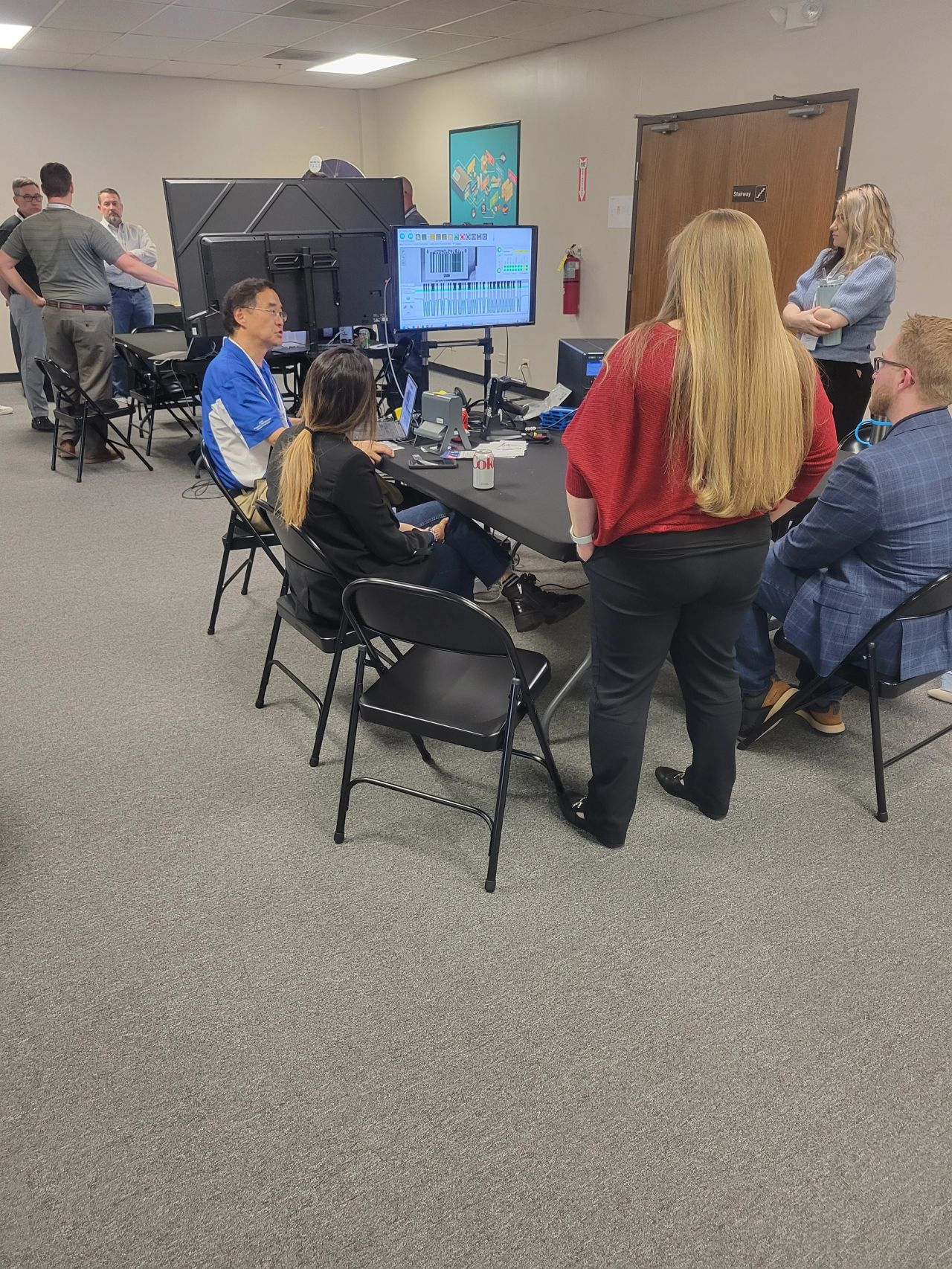
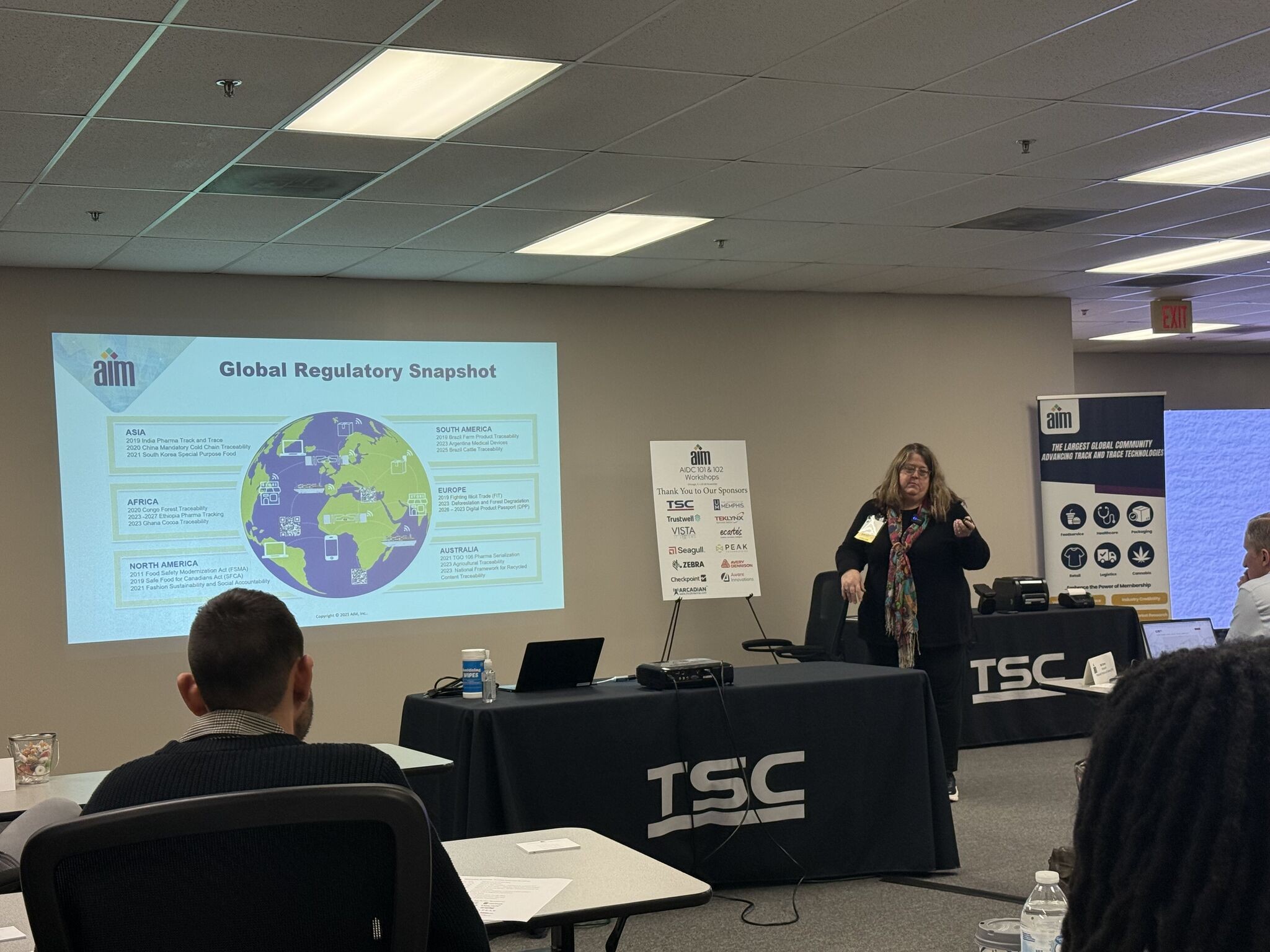
Launched in 2025 at the TSC Auto ID Academy in Chicago, the AIDC 101 and 102 Workshops are hands-on learning experiences are designed to give participants a practical understanding of Automatic Identification and Data Capture technologies (AIDC); from barcodes and RFID to sensors, IoT, and traceability solutions. Developed and led by AIM experts, these sessions combine classroom instruction with real-world demonstrations featuring today’s leading hardware and software solutions.
These workshops are ideal for new employees, customers, or partners who want to understand how AIDC powers modern supply chains, manufacturing, and retail operations. When people understand how barcodes, RFID, and connected sensors capture and share data, they see firsthand how these tools drive accuracy, efficiency, and trust across operations. Knowledge builds confidence, so a well-trained team can solve problems faster, a well-informed customer will make better technology choices, and both become stronger advocates for your solutions
AIM Summit
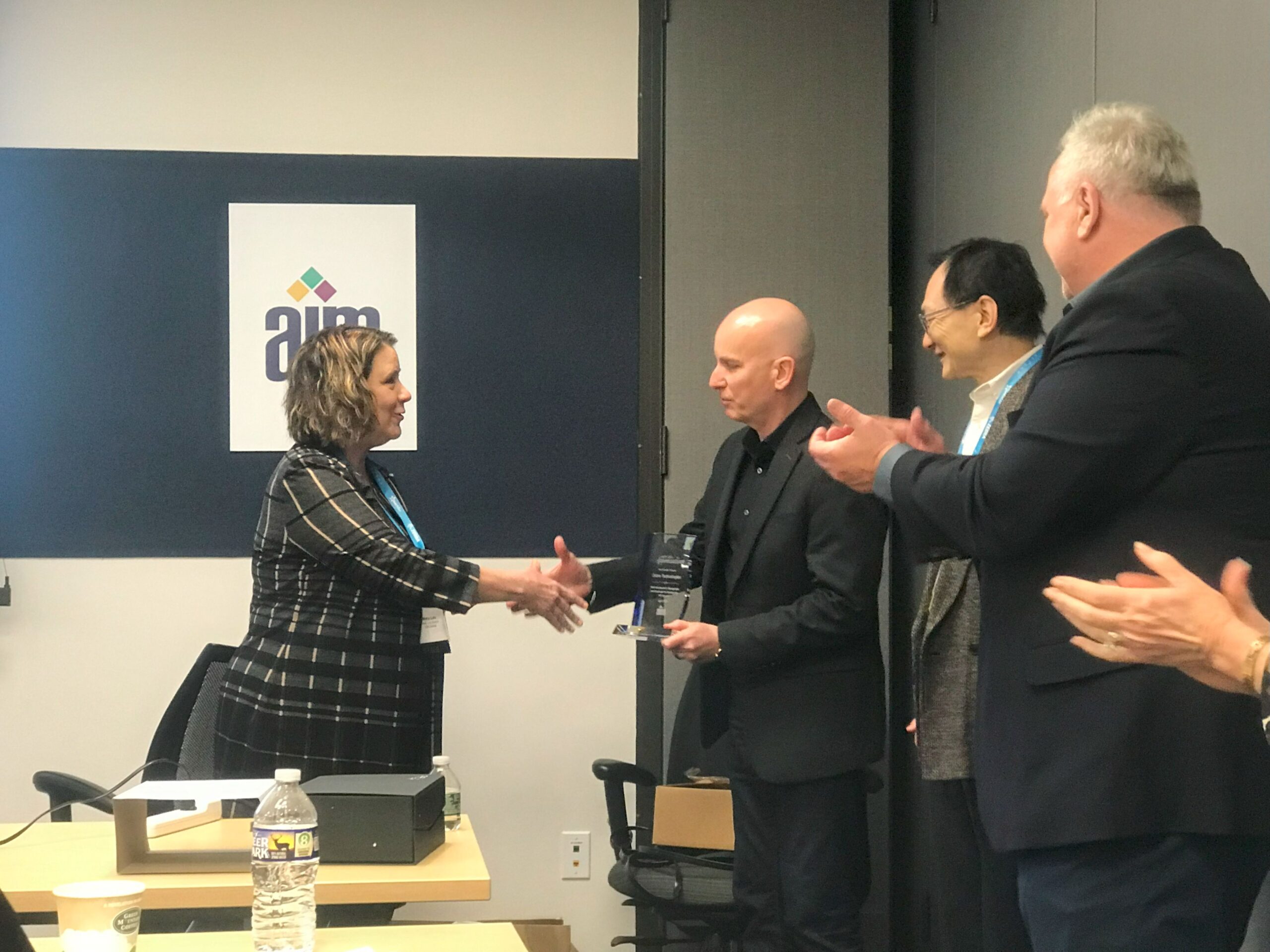
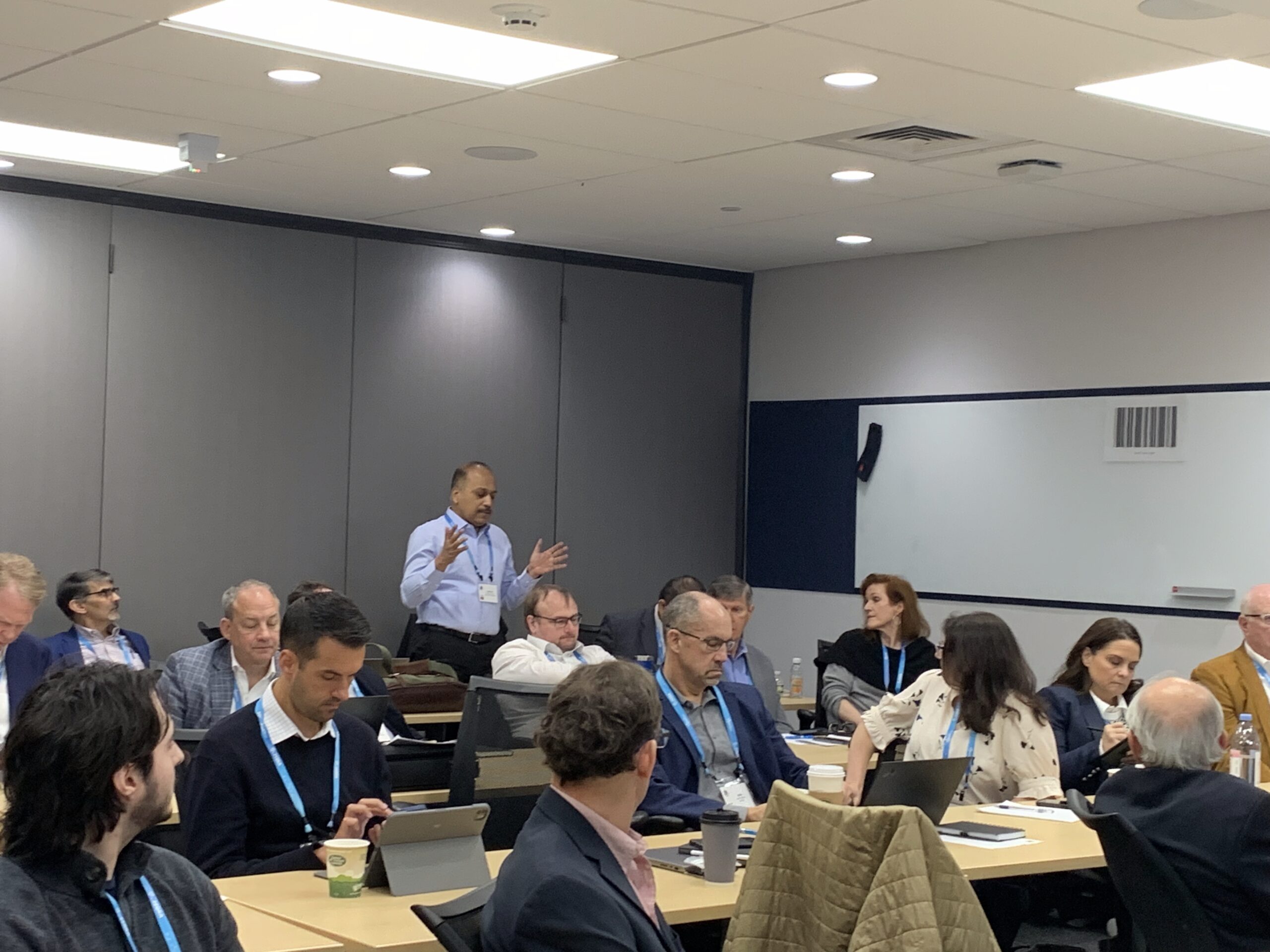
The AIM Summit is a premier event connecting industry leaders, technology experts, and professionals to explore the latest advancements in digital identification technologies. Anyone interested in gaining real-world knowledge of applications that maximize efficiency, enhance customer interest, and grow business took part.
This year’s event was held at the Zebra Technologies facility in Holtsville, NY. Attendees explored cutting-edge issues like emerging global opportunities in traceability, sustainability, anti-counterfeiting, data security, artificial intelligence (AI), and digital product passport (DPP). Through expert-led panels and discussions, attendees gained valuable insights into e-labeling, digital product passports, healthcare compliance, the latest trends, and global AIDC adoption with standards.


AIM Partnership Breakfast and Meetups
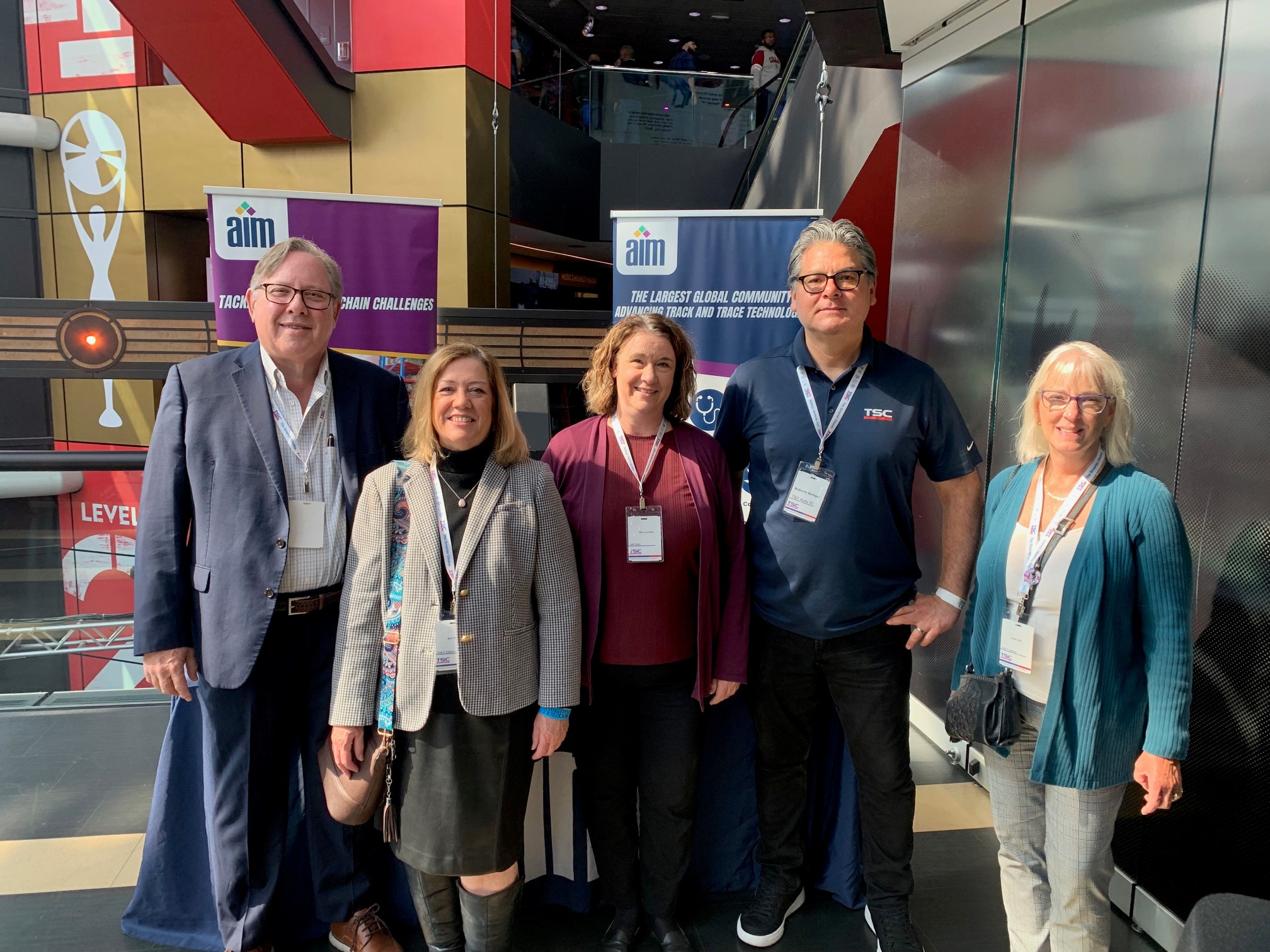
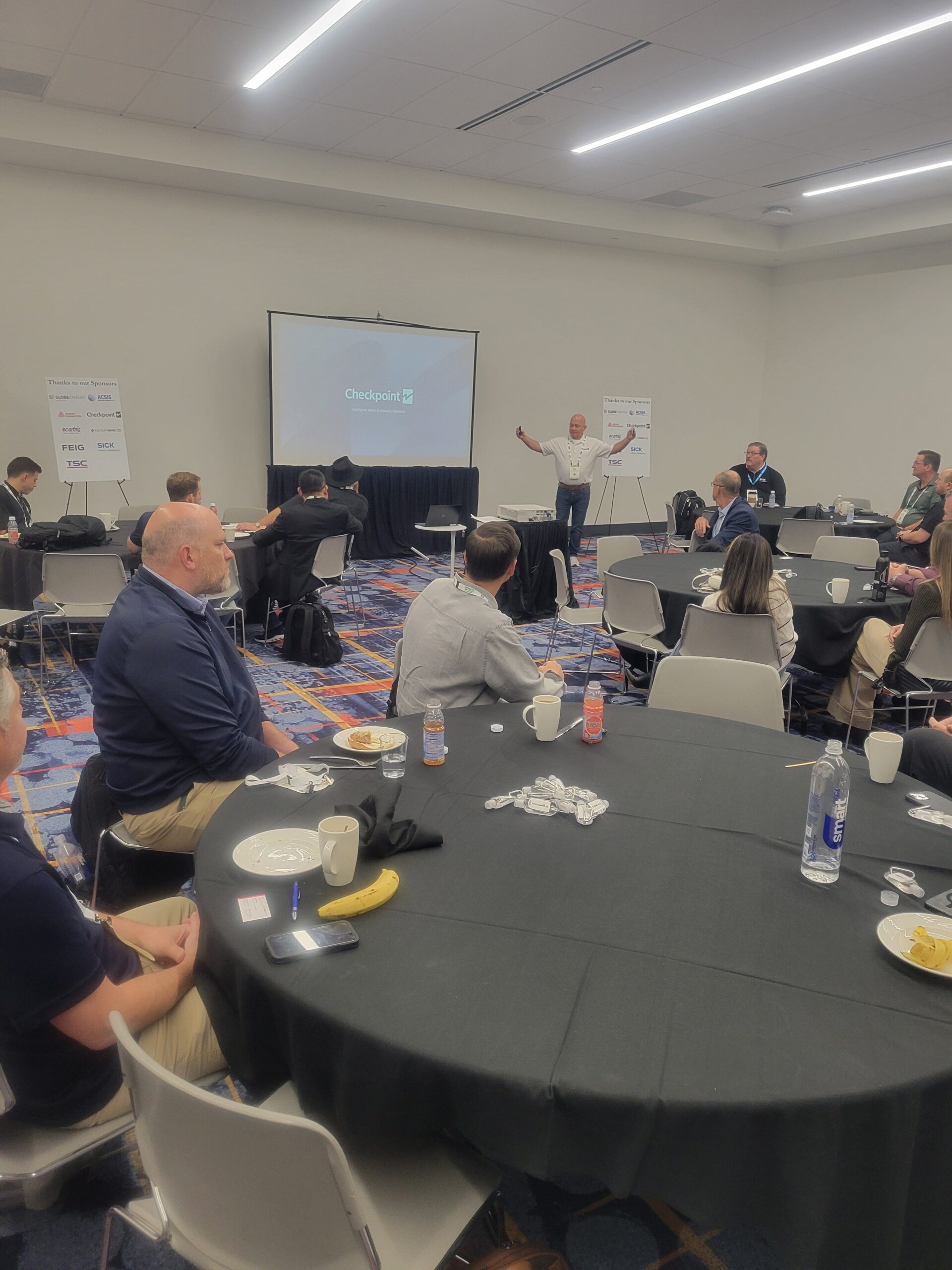
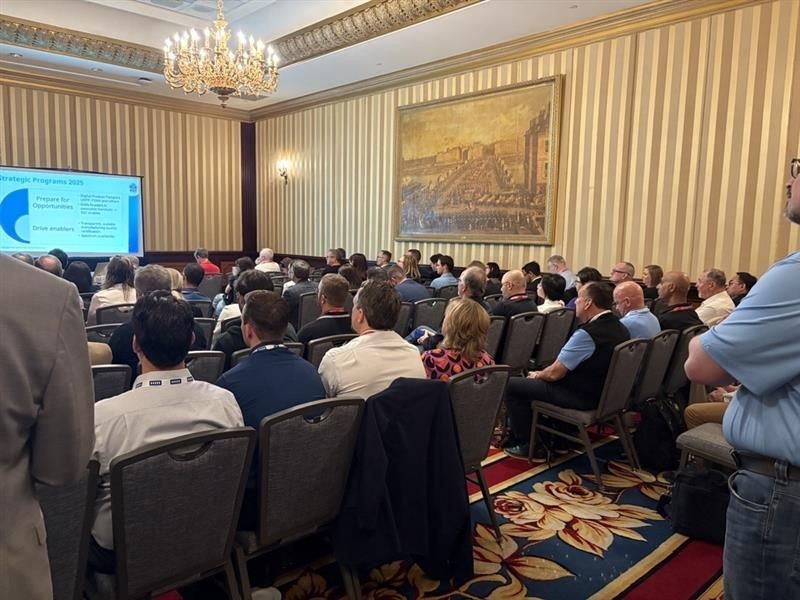
These networking events were held at various industry events throughout the year. They provide an opportunity for members, partners, and customers to foster relationships, strengthen connections, discuss relevant topics, and exchange ideas. These activities provide a platform for members to build their professional network and new members to learn more about the association from seasoned professionals.



RFID Experts Group
Chair: Jerry Peyton – Vista IT Systems
Mission Statement
The RFID Experts Group (REG) brings together global leaders
in RFID technology to develop best practices, standards-based
guidance, and resources that support the responsible
deployment, security, and adoption of RFID across all sectors.
REG focuses on ensuring RFID evolves to meet modern needs
around security, privacy, sustainability, and interoperability.
2025 Accomplishments
- Developing an RFID Security & Privacy Guidance Paper
- Released new recommendations for RFID Tag Recycling & Disposal, addressing sustainability and circular economy requirements
- Producing an educational RFID video series to help users and decision-makers better understand how RFID works and where it delivers value
- Developing a one-page explainer on RFID and carbon footprint measurement, clarifying that RFID does not calculate emissions but supplies
real-time tracking data that feeds carbon accounting and sustainability reporting systems - Partnering with the Retail Value Chain Federation (RVCF) to create an RFID FAQ for retailers, based on questions submitted by RVCF members
and currently being reviewed by REG experts - Creating guidance on retail challenges RFID can solve, including data integration with POS/ERP/WMS systems, avoiding data overload through
standards-based analytics, and selecting RFID inlays and materials that perform in challenging or sustainable packaging environments.

Visibility Technologies Industry Group
Chair: Dan Quagliana, Seagull Software
Mission Statement
The Visibility Technologies Industry Group (VTIG) is committed
to advancing the adoption and understanding of technologies
that enable end-to-end visibility across supply chains and
operational environments. VTIG empowers industries to track,
trace, and authenticate assets and inventory in real time.
2025 Accomplishments
• Led expert roundtable on IoT-enabled traceability and sensor ecosystems
• Published new Visibility Technology Landscape Map highlighting real-time data capture technologies across industries
• Hosted a three-part webinar series on Ambient IoT, RTLS, and digital identity in supply chains
• Added new working topic areas including Bluetooth tracking, smart labels, and edge-based visibility analytics
• Supported AIM’s engagement with PACK EXPO, ProMat, and LogiPharma through group member speakers and demos
Standards & Compliance
Standards remain critical in today’s world. Without proper development, implementation, or compliance, they can impact the success or failure of a new technology, product or business and affect consumer safety. As a leader in AIDC industry standards, AIM works with ISO (International Organization for Standardization) and ANSI (American National Standards Institute) to develop, revise, and educate both companies and users to ensure compliance in the global marketplace.

ADC1 Technical Advisory Group (TAG)
Chair: Chuck Evanhoe – Aware Innovations
AIM acts as the administrator of the U.S. Technical Advisory Group (TAG) to the International Organization for Standardization (ISO) Subcommittee SC 31. The
TAG serves as the delegate to the American National Standards Institute (ANSI) responsible within ISO for all work on standardization in automatic identification
and data capture in the U.S. Members of ADC1 represent companies with technical knowledge in AIDC who work together providing input during the process of
standardization to ensure both U.S. involvement and consensus on standards.
Highlights
• Review and response to work on all standards related to:
• Data carriers (TG1)
• Data & structure (TG2)
• Radio & communications (TG4)
• Application of AIDC standards (TG8)

Mary Lou Bosco
CEO
As 2025 draws to a close, I wanted to share a brief reflection on our collective achievements—and what’s ahead in 2026.
From lines in the sand to automation, AI, and robotics today, AIM has been there every step of the way. AIM is a nonprofit trade association that represents any organization that uses, implements, resells, or develops solutions utilizing barcodes, RFID, RTLS, vision, machine learning, sensors, and more. AIM supports open, interoperable traceability standards across all markets. We’ve been around for more than 50 years developing the technologies and standards we in this industry and consumers take for granted today.
Advocacy
Asset tracking technologies help companies comply with regulatory requirements and improve visibility and transparency, which is essential for food safety, pharmaceutical security, and other critical areas including cyber security, digital product passport, anticounterfeiting, and data privacy. These solutions contribute to cost reduction and increased efficiency across the supply chain. Additionally, they ensure that systems and processes are compatible across different countries and industries, enabling global trade and collaboration.
Community
The future is toward greater convergence. Asset tracking technologies are rapidly expanding globally, transforming economies, societies, and governance through innovations like AI, cloud computing, and digital platforms, boosting productivity and connectivity. The innovation of new technologies is expanding, and it is important to get involved and stay informed. Get involved in your industry associations such as AIM Global and stay connected with your industry distributor and vendor partners to stay abreast of new developments, new standards, new requirements which means more business for everyone.
Education & Insights
AIDC budgets are holding or increasing as enterprises are pursuing many more (and often more expensive) far-reaching technology programs, such as modernizing infrastructure and migrating it to the cloud, reimagining customer experience and adopting artificial intelligence. These programs can be viewed as competitors for resources, but in reality, many are potential catalysts for AIDC deployments because they all require large quantities of timely, reliable data. AIDC is the only mechanism that can deliver data at the speed and quality that modern systems need. For example, a new AI-based inventory management system won’t succeed if its algorithms for picking, put-away and allocation are based on incorrect inventory counts and item locations.
AIDC can improve the performance of almost any system by making more data available, making data more accurate and making data timelier. Those are underlying value propositions that have fueled AIDC’s past growth and will ensure its fit within future enterprise systems.
Standards
Standards provide a common language for businesses to identify, capture, and share information about products, locations, assets, and so much more. Organizations can utilize accurate and robust information, ensuring that the right product is in the right place at the right time, and allowing consumers to easily find the products they need. They assure that light bulbs fit sockets, that your ATM card works around the world, and that new technologies are interoperable.
In 2026 we will continue to see a massive push for greater supply chain visibility, automation, and the integration of technologies. AI, IoT, and robotics will not displace AIDC technologies, but instead will be leveraged to make operations as accurate and efficient as possible. The trend toward sophisticated systems means enterprises will likely be integrating disparate components from multiple manufacturers. AIDC products need to be integration-friendly, supporting the standards and protocols customers favor for various environments.
Skills shortages that help drive automation can also make it difficult for providers to add the talent needed to keep up with demand. As enterprise ambitions pull AIDC technologies in new directions, it becomes more important for providers to have partners with expertise in different technology and market domains.
Solution providers have a very successful history of educating potential buyers about how AIDC technologies make inventory control, WMS, materials management, ERP and other systems more effective. Equip your customers with the metrics that show the value proposition to sell to their executive teams. By doing so, your customer now becomes your partner. Thank you to everyone in this great industry who helped make this year a time of growth, innovation, and collaboration. Your partnership advanced this industry for all.
I invite you to watch our webinar which recaps key achievements and milestones and explore this complete AIM Year in Review to see the full story of what we have accomplished together.

Chuck Evanhoe
President & CEO
RFID has been called “mature technology” for more than a decade — which, in technology terms, is almost an insult. The industry tends to chase what’s new, but in the background, RFID keeps proving why it’s still the backbone of operational visibility.
While everyone’s talking about AI, machine learning, and predictive analytics, RFID quietly makes those systems possible. It’s the foundation that turns real-world movement into usable data. The technology has evolved well beyond its early reputation as a glorified barcode. Modern RFID systems now operate at the intersection of hardware, software, and intelligence — feeding asset data into cloud-based analytics, connecting to AI models, and helping organizations forecast demand, reduce waste, and maintain compliance.
The problem isn’t that RFID is old; it’s that too many people misunderstand its role. They see it as a one-dimensional tracking tool, rather than a data engine. When companies only think about RFID in terms of “tag and read,” they miss the point. RFID is the connective tissue of modern logistics — it’s what links people, products, and systems together in real time.
The shift from identification to intelligence
Today’s systems don’t just say, “This asset exists.” They say, “This asset moved outside its expected zone five minutes ago, which could indicate a process deviation or a theft risk.” When you combine RFID with AI and edge computing, you move from passive data collection to active decision-making. That’s the efficiency edge most businesses are chasing.
Take supply chain environments, for example. RFID tags now connect with IoT sensors and Bluetooth beacons to create continuous visibility. Instead of waiting for manual audits, managers can see what’s happening across warehouses, shipping routes, and facilities instantly. The value isn’t just in finding things faster — it’s in preventing problems before they occur.
Efficiency is built on trust — and trust comes from data
When people talk about “digital transformation,” what they really mean is “trusting data enough to act on it.” RFID builds that trust. It removes the guesswork from asset tracking and replaces it with facts. When teams have confidence in what they see, they make faster decisions, respond to exceptions in real time, and operate with less friction.
RFID isn’t the headline-grabber it once was, but that’s exactly what makes it powerful. It’s not hype anymore — it’s infrastructure. Just like the internet quietly underpins everything we do online, RFID quietly powers the efficiency behind supply chains, healthcare systems, transportation networks, and manufacturing plants.
Where efficiency is headed next
The next chapter for RFID isn’t about reinventing the tag — it’s about integration. The technology’s true potential will be unlocked when it fully merges with AI, cloud platforms, and predictive modeling. We’ll see RFID data feeding algorithms that detect anomalies, optimize energy usage, and guide workforce allocation. The hardware will keep getting smaller, the reads will get faster, and the intelligence layer will get deeper.
Efficiency doesn’t come from adopting the newest technology — it comes from connecting the right ones. RFID continues to be that essential bridge between the physical and digital world. It’s what transforms “tracking” into true operational awareness.
Where do you see the next leap in tracking technology — smarter sensors, better software, or a stronger connection between the two?

Anurag Kuhlshrestha
President & CEO
The Future of Real-Time Intelligence and Asset Integrity
As the global landscape shifts toward Industry 5.0 and mandates for hyper-traceability intensify, organizations require more than just a tracking system – they need real-time intelligence that drives productivity and ensures compliance.
Anantics stands at the forefront of this digital transformation, specializing in Passive Ultra-High Frequency (UHF) RFID and integrated IoT solutions. Our proprietary platform, IoTtix®, turns the most complex, disparate physical assets into a unified, actionable data stream. We don’t just track assets; we connect them to clients’ enterprise, delivering the visibility necessary for unprecedented operational efficiency.
Key Trends and Outlook for 2026
Deeper Convergence with IoT and AI
The future is less about a standalone RFID system and more about a fused solution.
•Actionable Intelligence: Combining RFID data with IoT sensors and Artificial Intelligence (AI) is transforming raw scans into business intelligence. This allows for predictive maintenance, optimized inventory flows, and demand forecasting.
•Real-Time Location Systems (RTLS): Passive UHF RFID is increasingly proving its worth in RTLS applications, directly competing with and complementing traditional active RTLS solutions. This is especially true in Industry 4.0/5.0 initiatives for monitoring critical assets.
High Demand for Specialized and Sensory Tags
•Condition Monitoring: The market is witnessing a strong demand for battery-free sensor tags (passive sensors) that harvest energy from the reader signal. These are ideal for monitoring conditions for high-value or sensitive assets, such as fresh produce (fruits/grocery) and temperature-sensitive goods, or for strain monitoring on heavy machinery.
Expansion into Diverse Industrial and Enterprise Applications
The applications which are major growth sectors in 2026:
•Aerospace MRO & Defense: Automated tool and asset tracking using RFID is becoming standard in aviation MRO (Maintenance, Repair, and Overhaul) to reduce downtime and ensure compliance. Furthermore, RFID weapons tracking and military asset management are key areas of growth.
•Heavy Industry & Manufacturing: There is a pronounced shift towards specialized RFID solutions tailored to industrial needs, including ruggedized tags for metal assets like rebars, train tracks, and specialized machines.
•Traceability and Compliance: Upcoming regulations, like the EU Digital Product Passport (DPP) starting in 2026, will mandate item-level traceability for select products. This creates a massive, government-driven need for UHF RFID solutions in the supply chain.
•Healthcare and Personnel: Tracking personnel (employees, visitors) and sensitive assets (decedents in morgues, surgical instruments) remains a key area for safety and efficiency, including infant protection systems in maternity wards.

Jeremy Schenof
VP Strategy, Intelligent Labels & Digital Solutions
The business landscape continues to evolve rapidly, with 2025 bringing significant advancements like RFID-enabled solutions for fresh food categories, as well as intensifying macro level challenges such as economic pressures and supply chain disruptions. Ensuring resilience throughout the supply chain with robust inventory management and end-to-end digital visibility will be key to success in the year ahead. RFID and Intelligent Label technologies will continue to play a pivotal role by enhancing transparency, optimizing supply chain efficiency, reducing waste, and strengthening connections between brands, retailers and consumers.
One of the most groundbreaking developments in 2025 was the introduction of RFID-enabled labels in fresh food categories like meat, bakery, and deli. This innovation addressed long-standing challenges in high-moisture environments with densely packed items, enabling faster, more accurate inventory tracking and significantly reducing food waste. By giving each item a digital identity, retailers like Walmart gained unprecedented visibility into inventory, enabling better expiry management and improved on-shelf availability. This breakthrough sets the stage for broader adoption of RFID in fresh food and other complex categories in 2026.
Looking ahead, several key trends are expected to shape the future of the industry. Passive Bluetooth Low Energy (BLE) solutions, such as those enabled by Wiliot, are poised to gain momentum in 2026, offering cost-effective, battery-free pallet and case-level tracking and condition monitoring. RAIN RFID capabilities in enterprise smartphones and will also drive adoption, making item-level tracking more accessible. Overhead readers, which made significant progress in 2025, will continue to expand their role in enabling seamless, automated inventory visibility across retail environments.
While there is a lot of activity around AI, serialized, item-level data remains a critical input for AI tools. This data provides the foundation for predictive analytics and agentic driven decision-making, enabling businesses to make faster, smarter, data-driven decisions. As AI evolves, technologies like RFID will play an essential role in generating the accurate, real-time data needed to unlock its full potential.
The RFID and broader Intelligent Labels market is expected to continue its upward trajectory, driven by its ability to provide item-level digital identities that transform operations. In grocery retail, for example, RFID is enabling smarter inventory management, reducing waste, and enhancing customer experiences. This technology is helping retailers optimize their operations while meeting growing consumer demands for freshness and sustainability.
As we move into 2026, the continued success of Intelligent Label technologies will depend on a dedicated ecosystem of partners and a commitment to innovation. By addressing industry challenges and leveraging opportunities, we can create a more sustainable, efficient, and connected future together.

Mark Fraker
Chief Technology Officer

Dean Reverman
VP, Global Marketing
Channel Outlook: Driving Growth Through AI, Connectivity with 5G and RFID, and Robotics
As we look ahead, the channel is entering a transformative era—one where technology convergence and workforce readiness will define success. At BlueStar, we’ve had a front-row seat to these changes, and our insights come directly from what we’ve seen in our business over the past 18–24 months.
Robotics: Moving up to the Top of the Technology Hype Curve
CO-BOTS are the best investment at these time & over next few years because CO-BOTs will work alongside of the human work force and increase efficiency and reduce labor cost across all businesses, and verticals.
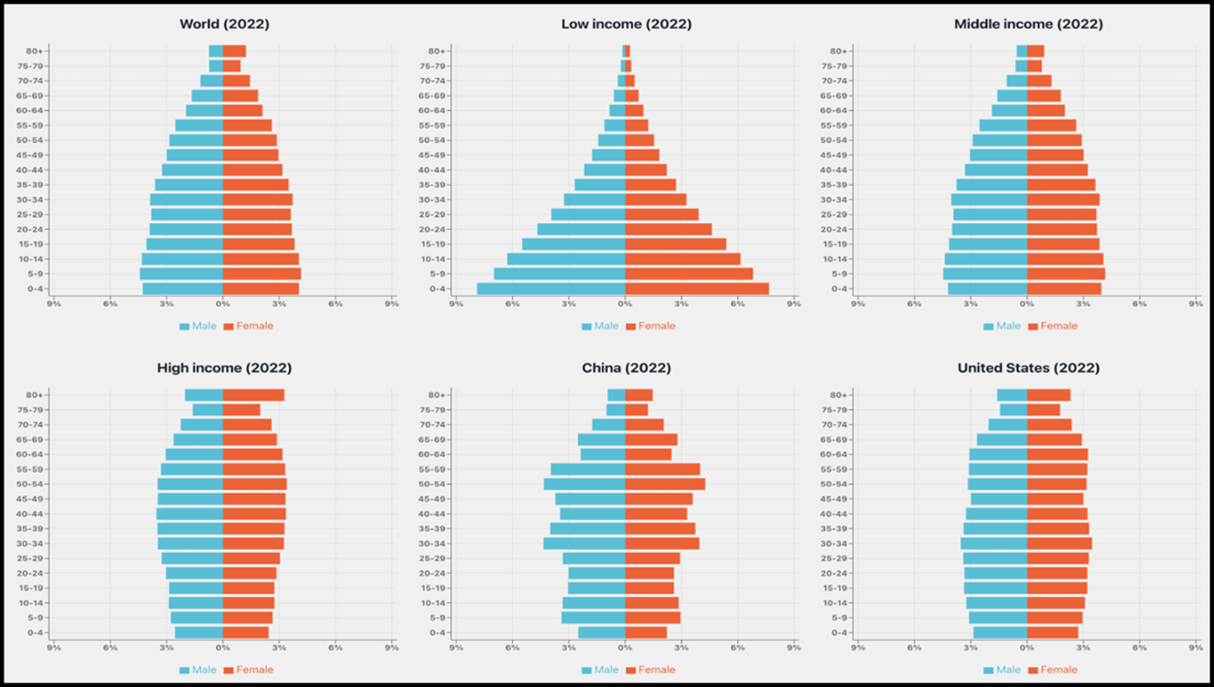
This graph from the National Heath Profile of 2022 depicts the global and country population by age and male vs female.
The main reason for the surge in robotics is global depopulation. The work force is shrinking, and the human longevity is increasing around the world. Replacement fertility rate needs to be at 2.1 children per woman to sustain a workforce that can serve the entire population of a country.
Countries with a stronger economy will see the introduction of CO-BOTs prior to low-income countries that have a larger population base to support a work force.
The smaller workforce is developed countries is putting stress on healthcare, warehousing, and hospitality and retail business as they compete for workers to fill repetitive work positions. There are strong ROIs for many businesses across many verticals for CO-BOTs.
This includes great margin stacks for tech companies that deliver and support robotics solutions. Robotic solutions are typically a platform sale which includes hardware, software, warranties and services.
In tech, follow the money for trends. Watch the investments of the tech OEMs into robotics. Examples are LG purchased 51% controlling stock into Bear robotics and Epson is heavily involved in robotics and in acquisition mode. Intel has introduced their Robotic AI Suite in Q4 2025.
Networking and Connectivity: The Frontier Fueled by RFID and 5G
Almost every edge solution requires connectivity and networking. Connectivity is no longer a supporting player; it’s the backbone of every AIDC and RFID deployment. Our networking and connectivity practice has grown tremendously in 2025 because end-users demand seamless integration between devices, cloud platforms, and analytics engines. VARs who embrace networking as part of their portfolio can position themselves as strategic partners, not just hardware providers. Think edge computing, secure wireless infrastructure, and IoT-ready networks—these are the building blocks for smart factories, omnichannel retail, and connected healthcare. The opportunity is clear: those who invest in connectivity expertise will lead the charge in delivering holistic solutions.
Think of physical AL, the physical sensors like RFID, BLE, and LORAN sensors that gather the data so AI can be monetized. All require 100% connectivity, 100% of the time, and failover with dual sim cards is a must, and more solutions are including satellite connectivity such as StarLink solutions.
RFID plus Sensors will dominate. Expect explosive growth in sensor-enabled RFID applications across supply chain and healthcare. Our RFID business has experienced significant growth over the last two years, and the trajectory shows no signs of slowing. What began as a steady adoption curve in retail and logistics has accelerated into manufacturing, healthcare, and even emerging sectors like smart agriculture.
The real game-changer, Sensors…RFID combined with sensor technology is unlocking new possibilities for real-time environmental monitoring, cold chain compliance, and predictive maintenance. For VARs, this means moving beyond traditional asset tracking into solutions that deliver actionable intelligence—creating opportunities for recurring revenue and deeper customer engagement.
AI: At the top of the Technology Hype Curve
We believe that there is too much AI hype in the world. The term AI is being misused by many tech companies. When they state their product uses AI it is merely enhanced report writing and dashboards.
Strong AI is what happened, why did it happen, what will happen- how do we make it happen. AI solutions that support this concept, will the solutions that capture market share in the long run.
The real question is how you monetize AI, and many tech companies have no idea…a little bit like RFID from 2015 to present… “Is this the year of RFID”? Well, “Is this the year of AI”?
The best monetizing of AI is in the form of intrinsic value. Here is an example of intrinsic value of AI & Robotics in a retirement community. Robotic with AI are used to deliver food in the dining rooms and in retirement community, helps keep workers on the dining area and residence rooms, or delivery of packages from the front desk to residence rooms. One of the goals in a retirement community is to increase the patient overall experience, and have the staff engaged with the residents. If you can have waitstaff in the dining room rather than running back and forth to the kitchen a facility can increase the patient’s overall experience. Very similar to the old “Hi Norm” experience “where everyone knows your name”. At the end of the day, how much does it cost a retirement community to fill a resident’s spot which was vacated because of poor resident’s experience, which in some cases is more than cost of one CO-BOT for one year.
We are seeing more AI solutions for businesses to cut expenses with automating processes internally rather than AI solutions to drive revenue outside the four walls of the business.
We see good monetization models for AI in the following models:
1. SaaS Subscription Models – Provide access to AI capabilities via a subscription, often tiered on usage, number of agents, number of models, value delivered.
2. Usage based / consumption – based pricing – charged based on volume of data processed, number of inferences, actions taken by AI system. This allows lower entry cost, scales as value grows.
3.Outcome based / performance linked pricing – align pricing with business outcomes (Cost savings achieved, productivity improvement) This encourages trust with clients and reduces risk of “just analytics”.
4.Platform = Ecosystem Play – Provide core AI capability (model= data platform) and then monetize via an ecosystem of applications or partners. Similar of Platform as a business model.
5.Vertical Solution Bundling – Combine AI= domain expertise+integration+services into packaged “vertical Solutions”. (Ex. AI for retail demand forecasting, AI for equipment maintenance).

Steven Keddie
Senior Director, Automatic Identification and Data Capture (AIDC) and SME Lead
The 2D Retail Capability Will Unlock a More Inclusive Future for Shoppers With Sight Loss
The growing adoption of an agreed set of 2D barcodes by retailers and brand owners represents one of the most significant transformations the retail industry has witnessed in decades. Much of the conversation naturally focuses on supply chain visibility, food safety, traceability, and the operational efficiency gains retailers stand to unlock. But there is a parallel revolution happening at the exact same time: the emergence of one of these barcodes, the GS1-powered QR Code, as an accessibility enabler for the 2.2 billion people worldwide who live with some form of visual impairment.
As brands and retailers adopt 2D barcodes, packaging ceases to be a static surface. Instead, it becomes a smart, scannable digital gateway that can adapt itself to the needs of each shopper, including those who cannot rely on traditional visual cues.
Combining accessible QR Codes with smart device screen readers ensures that product information is inherently accessible, benefiting everyone. For the first time, accessibility is no longer an afterthought or a specialized add-on; it becomes embedded directly into the packaging that already exists.
Today, companies like Zappar, NaviLens, and Envision are demonstrating what this future will look like.
• Zappar’s Accessible QR Code enhances the GS1-powered QR Code framework, with advanced detection technology and larger scanning zones. This makes them easier to find and scan for users with low vision. Their system also includes structured accessibility workflows, providing essential product details through screen readers. Brands can centrally manage enriched content, ensuring accessibility information is accurate and up-to-date.
• NaviLens now leveraging GS1-powered QR Code, enables shoppers with sight loss to detect and locate products from a distance, without needing precise aiming. Their high-speed, wide-angle detection technology paired with GS1’s structured data model creates a powerful bridge between physical packaging and accessible, meaningful product information.
• Envision, optimized for blind and low-vision users, interprets on-pack data and reads it aloud in real time, enabling independent browsing in stores, kitchens, and beyond.
The real unlock comes when these accessibility technologies intersect with the additional data encoded in barcodes themselves. For instance, a single GS1-powered QR Code can be used to convey information through a smartphone’s audio.
• Allergen warnings (“Contains nuts,” “Gluten-free,” “May contain soy”)
• Dietary suitability (vegan, kosher, halal)
• Real-time product status (expires today, recalled)
• Usage instructions and recipes tailored to dietary needs
• Sustainability information and disposal instructions
For a shopper who cannot easily read small print or cluttered packaging, this kind of information is transformative. It restores independence, confidence, and safety.
The powerful truth is that 2D barcodes democratize product information, not by creating a separate “accessible ecosystem,” but by allowing every single product in the store to become inherently accessible. As more brands adopt GS1-powered 2D barcodes and begin adding enriched content, the industry will move beyond compliance to enable a new era of consumer empowerment.
Looking ahead, the retail sector will begin to treat accessibility not as a requirement but as a competitive advantage. Products that are easier to find, understand, and trust will win loyalty from consumers who have historically felt overlooked. As more solution provider such as printers, scanners, POS systems, app developers, and digital experience platforms embrace accessibility by design, an increasing array solutions will be offered and the benefits will become universal.
The increasing 2D capability isn’t just a technological upgrade; it’s a human upgrade. It unlocks a retail environment where every shopper, regardless of visual ability, can make safer, smarter, more informed decisions. In many ways, enhanced accessibly will become one of the most important and meaningful outcomes of the 2D barcode movement and proof that when the industry modernizes, it can change lives.

Kristen Newquist
CEO
Across healthcare, logistics, retail, food, and consumer goods, teams were asking precise questions around their IoT deployments: How does this tag perform on a temperature-controlled medication? How long will it provide accurate authentication on smart home device consumables? Can consumers rely on it after months in a distribution center? How can it be used in the cold chain to improve food freshness and reduce food waste? And importantly, customers weren’t asking for technology that claimed to“fix” what they already do well – they wanted specific solutions that clearly addressed the gaps or burdens they themselves identified. That shift in expectations is what pushed the conversation from broad promises to a deeper understanding of what IoT must actually deliver.
As that understanding deepened, organizations began to appreciate the full potential of IoT in far more practical terms. As they developed a clearer sense of what IoT can truly enable, their requirements became increasingly specific – and traditional, off-the-shelf designs are not always able to deliver. Specialized IoT is meeting that demand at scale.
A Year Built on Years of Preparation
The momentum we saw in specialized IoT in 2025 was built on years of experience and deliberate engineering: refining materials, expanding form-factors, and investing in multi-component manufacturing as the market was beginning to evolve and move into more and more applications. The goal has always been the same – make digital identity possible for anything that benefits from it, especially in the environments where it’s historically been hardest to deliver.
For us, 2025 wasn’t a turning point as much as a convergence. As customer requirements expanded and grew more intricate, the industry gravitated toward the very capabilities we’ve spent years refining. And the market’s increasing specificity required a level of readiness that only came from specialization: deep technical capability, adaptable manufacturing, and hundreds of available form factors that can address real-world needs.
BLE, NFC/ HF, and UHF RFID Each Found New Ground
As organizations see the opportunities enabled by adding digital IDs to more and more of their products, their IoT requirements often become more specific along with the underlying technologies and form factors.
BLE continued to gain momentum in 2025, especially in applications where cost efficiency and continuous sensing are critical. Temperature and various condition monitoring, along with location tracking, are benefitting from BLE’s maturing ecosystem and lower barrier to deployment. The conversations have evolved from whether BLE is viable, into how far it can scale.
NFC/ HF gained traction in smart packaging as brands moved from pilots to planning around the Digital Product Passport (DPP) regulation. Its secure, tap-based interaction model makes it a natural fit for authenticity, product information access, and consumer engagement on everyday goods. In healthcare, NFC/HF also emerged as a technology for patient support. Its ability to provide on-demand guidance – such as medication instructions or refill prompts – aligns with growing interest in improving adherence and patient safety through simple, phone-based interactions.
UHF RFID expanded further into healthcare operations. What began as a retail inventory technology now underpins broader asset tracking and traceability across instruments, equipment, and supplies – especially those moving through harsh sterilization, reuse, and distributed care environments.
Where 2026 Is Headed
As we look ahead into 2026, the next phase of specialized IoT is about readiness at scale – the ability to give digital identities to anything, at the speed customers require.
Organizations are asking for solutions that provide near real time data, withstand harsh cleaning and various types of sterilization, operate in extreme temperatures, function across complex materials, and support new sustainability requirements – supported by closer collaboration with chip, software, and integration partners.
In many ways, the market is asking for what we’ve been building towards for the last decade: specialized technology tailored to the product it serves. 2025 made that clear through the variation and specificity of our customer requirements. 2026 will turn that into broader deployment.
The Vital Role of Verification and Barcode Reading in Achieving End-to-End Traceability
Traceability has become a cornerstone of modern manufacturing and supply chain operations. It ensures compliance, quality, and transparency throughout the product lifecycle, from raw materials to finished goods. Two critical steps enable effective traceability: verification and barcode reading. These processes form the foundation for accurate data capture and reliable product identification, creating a seamless link between the physical and digital worlds.
The Essential Role of Verification and Barcode Reading
Verification in barcode reading and traceability ensures that each barcode is accurate, readable, and compliant with required standards. It confirms the correct code format and validates that the encoded data matches the product’s digital record. This step prevents misreads and maintains the critical link between physical items and their digital identities for reliable traceability. Barcode reading, on the other hand, connects physical products to their digital records, enabling real-time tracking and integration with enterprise systems. Together, these steps provide the visibility and control needed to maintain compliance and optimize operations.
Technology and Solutions for Verification
Verification is especially critical in industries where compliance is mandatory. A prime example is the Unique Device Identification (UDI) mandate in medical device manufacturing, which requires precise identification and validation of components. Advanced vision systems equipped with high-resolution imaging and AI-driven algorithms can verify part presence, orientation, and quality with exceptional speed and accuracy. These solutions go beyond basic checks by detecting subtle defects and inconsistencies that traditional methods might miss. Automated verification not only ensures regulatory compliance but also reduces rework and scrap, improving efficiency and lowering costs. Scalable systems that integrate seamlessly with production lines allow manufacturers to maintain high throughput without compromising quality.
Technology and Solutions for Barcode Reading
Barcode reading is undergoing a significant transformation as industries move from traditional one-dimensional barcodes to two-dimensional codes that carry more data in a smaller space. This evolution demands readers that combine speed, flexibility, and durability. High-performance imaging-based scanners can decode both 1D and 2D barcodes under challenging conditions, such as curved surfaces, low contrast, or high-speed environments. Features like advanced lighting control and adaptive focus ensure reliable reads even in dynamic production settings. Accurate barcode reading is essential because it connects every product to its digital identity, enabling seamless integration with ERP and MES systems and supporting advanced analytics for process optimization. As supply chains become more complex and global, the ability to capture and share detailed product information quickly and accurately is no longer optional, it is a competitive necessity.
Conclusion
Verification and barcode reading are not just technical steps; they are strategic enablers of traceability. As regulatory requirements tighten and supply chains become more complex, investing in advanced verification technologies and high-performance barcode readers is essential. These solutions ensure compliance, enhance quality, and provide the transparency needed to build trust with customers and stakeholders. By mastering these two critical steps, organizations can position themselves for success in an increasingly data-driven and regulated world.

Jeff Browning
Sr Director of Product Marketing
2026: The Breakout Year for AIDC Reinvention
For years, automatic identification and data capture (AIDC) technologies have been celebrated as enablers of accuracy, efficiency, and digital transformation. Yet adoption has been uneven. Large enterprises in industries like finance, healthcare, and retail have dominated the space, leaving small to mid-sized manufacturers, warehouses, and trades on the sidelines due to high costs, complexity, and the perception that advanced AIDC tools simply weren’t built for them.
That changes in 2026.
A perfect storm—falling technology costs, the rise of AI-augmented development, a wave of new creative vendors, and growing operational pressure—will open the door for organizations that have historically been overlooked. The coming year marks a major turning point in AIDC accessibility, practicality, and impact.
RFID Reaches Its Inflection Point
RFID has long carried a reputation: too expensive, too unreliable, too specialized. But this reputation was shaped by early implementations in high-volume, low-margin industries such as retail—scenarios that demanded extreme scale and ultra-tight error tolerances.
Today, the economics have flipped.
RFID readers, infrastructure, and labels have dropped in cost dramatically. AI-enhanced calibration and improved read-reliability have made deployments simpler and more dependable. And most importantly, operational pressures in small and medium industrial sectors have changed the equation.
For companies struggling to understand asset location, status, condition, lifecycle, and movement patterns, RFID now represents cheap insurance instead of an outsized investment. A fifty-cent tag and a handheld reader give teams unprecedented visibility into where assets are, where they’ve been, and whether they’re available, in use, damaged, or overdue for replacement.
Organizations adopting RFID are seeing:
• Inventory and asset accuracy rise from ~60% to 95%+
• Dramatic reductions in wasted purchases
• Fewer service disruptions tied to “lost” inventory
• Stronger chain-of-custody control
• Better lifecycle management of tools, equipment, and parts
For industries like tool rental yards, equipment depots, fabrication shops, MRO operations, and smaller manufacturers, the value proposition has shifted. High-clarity visibility is now affordable, implementable, and immediately impactful.
AI Agents Become the New AIDC Workforce Multiplier
Most companies are already familiar with AI assistants like ChatGPT or Copilot. But 2026 will usher in a different paradigm: AI agents purpose-built to operate business workflows—continuously, autonomously, and directly powered by AIDC data.
Instead of simply answering questions, these agents will do work:
• Monitor inventory conditions in real time
• Trigger alerts and recommended actions
• Analyze movement patterns and predict disruptions
• Support frontline staff with contextual guidance
• Automate repetitive data reconciliation
• Identify exceptions and root causes instantly
For organizations with lean teams—a reality across nearly every industrial segment—AI agents will function as digital teammates. With inexpensive platforms and accessible training resources, companies will break down workflows, build agent-based tasks, and unlock outsized returns on even minimal monthly investments.
Those who embrace agent-driven thinking will gain something that feels like an Iron Man suit foroperations: superhuman awareness, faster reactions, and insights that would have required entire teams in the past.
Pragmatism Overtakes “Perfect Transformation”
The past decade was filled with grand digital transformation roadmaps, most of which stalled due to cost, complexity, or shifting priorities. But persistent economic and geopolitical uncertainty is pushing organizations to rethink their approach.
In 2026, the winners will be those that:
• Favor iterative improvements over massive rollouts
• Choose solutions they can deploy in weeks, not years
• Invest in technologies that solve today’s urgent problems
• Prioritize adaptability over architectural perfection
This shift elevates practical AIDC solutions that are turnkey, scalable, and grounded in immediate operational value. Vendors that focus on fast time-to-impact—rather than highly customized, multi-year implementations—will lead the market.
AIDC’s Most Transformative Year in a Generation
If the 2010s were dominated by large-enterprise AIDC advances, the mid-2020s belong to the rest of the market. Small and midsize organizations are ready, the tools are finally accessible, and AI is giving AIDC data the “brain” it has always needed.
In 2026, the focus shifts from transformation for the few to transformation for everyone. And that democratization will reshape the trajectory of industries that have long been underserved.

Don DeLash
Sales Director - Logistics Automation
The Future of Logistics: Predictions for 2026
The logistics industry continues to accelerate toward automation and digital transformation, and it’s thrilling to witness this kind of evolution. As exciting as it is to see our industry become even more technologically sophisticated, 2026 will be a defining year for how businesses adapt to these changes. At SICK, we see this evolution as an opportunity to empower our customers with smarter, more connected solutions that meet rising demands for efficiency, compliance, and agility.
When I think about the future for logistics, here are the four big things that come to my mind:
1. Compliance Drives Innovation
Regulatory initiatives such as GS1 Sunrise 2027, Digital Product Passport (DPP), FSMA, and UDI/GUDID are reshaping how enterprises manage product data and traceability. These requirements aren’t just checkboxes—they represent a strong growth opportunity for companies that embrace automation. SICK is committed to helping customers stay ahead of these mandates with sensor-based solutions that ensure accurate identification and data capture across the supply chain.
2. AI Moves to the Frontline
By 2026, 40% of enterprises are expected to invest in AI for frontline operations, and this trend will transform logistics workflows. AI-powered sensors will enable predictive maintenance, real-time analytics, and automated decision-making. This enables the reduction of downtime and improves throughput. At SICK, we’re integrating AI into our auto ID portfolio to deliver actionable insights that optimize performance and enhance operational resilience.
3. Auto-ID Technologies Remain Critical
Despite the rise of AI, barcode scanning and RFID systems remain critical technologies for enterprise modernization. These tools provide the foundation for seamless item-level tracking and compliance with GS1 standards. Combined with vision sensors and IoT connectivity, they enable real-time visibility from warehouse to last-mile delivery—ensuring accuracy and speed in every transaction.
4. Industry Growth and Collaboration
According to AIM, 71% of AIDC professionals expect demand to grow through 2026, driven by ecommerce expansion, sustainability initiatives, and global supply chain complexity. Collaboration across the industry will be essential to meet these challenges. SICK is proud to work alongside AIM and other stakeholders to advance standards and interoperability, ensuring that our customers benefit from solutions that are future-ready.
As we look ahead, our goal remains clear: to help logistics organizations build smarter, more agile systems that deliver efficiency, compliance, and competitive advantage. The next era of logistics is here, and SICK is ready to lead the way.

Andrew (Andy) Edwards
VP Global Business Development
Navigating AIDC in 2026: Threats, Opportunities, and Transformation
As we move into 2026, the AIDC industry stands at a pivotal point. The convergence of traditional identification technologies with advanced analytics, AI, and IoT is creating unprecedented opportunities, but also introducing new layers of complexity and risk. The biggest challenge will be delivering secure, integrated, and intelligent solutions at scale while maintaining profitability and customer trust.
Cybersecurity is at the forefront of these concerns. AIDC is no longer limited to isolated scanning devices; today, barcodes, RFID tags, and IoT sensors feed directly into cloud platforms and enterprise systems. This expanded connectivity increases the attack surface dramatically. A single breach, whether at a vendor, integration partner, or within a customer’s network, can cascade across entire operations, threatening not just data integrity but the continuity of critical processes. For industries like retail, logistics, and healthcare, where uptime is non-negotiable, the stakes are high. Solution providers must embed security into every layer of their offering, from device firmware to cloud APIs, and enable continuous monitoring to detect and neutralize threats before they escalate.
Alongside security, talent availability is becoming a pressing issue. The skill sets required to design and deploy modern AIDC solutions are evolving rapidly. It’s no longer enough to understand barcode standards or RFID protocols; today’s projects demand expertise in AI, machine learning, edge computing, and advanced analytics, combined with knowledge of legacy systems. Professionals who can bridge these worlds are scarce and expensive. This talent gap threatens to slow innovation and complicate large-scale deployments, making workforce development and strategic partnerships essential priorities for providers.
While these challenges are significant, they exist against a backdrop of extraordinary technological opportunity that is reshaping the industry. Ambient IoT and ultra-low-cost RFID tags are transforming AIDC from an episodic scanning event into a continuous telemetry fabric. Enterprises can now instrument far more assets, locations, and processes than ever before, unlocking real-time visibility across supply chains. At the same time, the value proposition is shifting from data capture to data-driven services. Predictive replenishment, shrink reduction, workflow optimization, and exception analytics are becoming the differentiators that separate strategic partners from commodity vendors.
The technology with the greatest impact on end users will be unified platforms that merge RFID, barcodes, sensors, and computer vision with cloud and AI. These ecosystems will make it possible to know, in near real time, the identity, location, condition, and history of every critical asset—at scale and at acceptable cost. For retail, this means inventory accuracy above 98% (reducing the $1.8tn global cost of inventory distortion – estimated by IHL 2023) with fewer out-of-stocks, and near-frictionless checkout or dispatch. For regulated industries, it means automated, verifiable chain-of-custody, reducing compliance risk and the labor required for audits and recalls.
In short, the industry’s biggest challenge for 2026 is managing risk and complexity while unlocking the full potential of intelligent AIDC ecosystems. Providers that combine robust security, seamless integration, and advanced analytics—while addressing the talent gap—will define the next era of AIDC leadership.

Tony Fonk
CEO
AIDC’s 2026 Crossroads — Precision, Trust, and the Rise of Connected Supply Chains
As we move into 2026, data capture providers stand at a watershed moment—especially in the life sciences, where supply chain integrity directly affects patient outcomes. At the center of this transformation is AIDC (Automatic Identification and Data Capture), the ecosystem of technologies—from barcodes and RFID to smart indicators, sensors, and IoT devices—that automatically identify products, capture critical data, and make that information instantly accessible. In sectors handling temperature-sensitive biologics, blood products, diagnostics, and fragile equipment, the demand for accurate, real-time environmental data is redefining what customers expect from AIDC solutions. These pressures shape both the risks and the opportunities ahead for our entire community.
The biggest threat facing data capture providers in 2026 is the widening gap between the complexity of life science supply chains and the limitations of legacy identification tools. For manufacturers, distributors, and healthcare networks, simple “yes/no” indicators or disconnected tracking systems are sometimes enough. But increasingly, end-users now expect contextual
data – time, temperature, location, shock, and tilt excursions – that can prove compliance and product viability. If providers fail to evolve toward connected, interoperable solutions, the disconnect between customer needs and available technology will widen rapidly. AIM’s leadership in standardization and global interoperability will be critical in preventing market fragmentation.
Yet the industry is also on the edge of extraordinary opportunity, especially in Life Sciences. The rapid expansion of precision medicine, temperature-sensitive therapies, and high-value diagnostic equipment is driving unprecedented demand for
sensor-enabled, data-rich supply chain solutions. Whether ensuring a vaccine remained within 2 – 8°C, confirming the integrity of fragile imaging instruments, or documenting that a biopharmaceutical shipment never encountered damaging shock, customers want actionable transparency. At SpotSee, we’ve seen organizations reduce temperature- and impact-related losses by more than 60% after integrating smart sensors and connected monitoring. That level of operational improvement underscores the transformative potential of modern AIDC technologies.
Looking forward, the technology that will have the greatest impact on end users will be low cost, intelligent, cloud-connected sensors that seamlessly bridge the physical and digital worlds. Battery-free smart indicators, QR-enabled event capture, and low-power IoT devices are giving life science companies real-time insight—without adding complexity or cost. Solutions like SpotSee’s WarmMark QR, FreezeSafe QR and ShockWatch 2 QR demonstrate how temperature excursions, shock events, and handling conditions can be instantly recorded, time-stamped, geolocated, and shared. This level of traceability is increasingly non-negotiable for Life Science organizations navigating regulatory scrutiny, global distribution, and strict chain-of-custody requirements.
Finally, our industry’s greatest challenge in 2026 will be ensuring interoperability and trust across increasingly complex global supply chains. Life sciences, more than any other sector, depend on consistent, validated data from manufacturing to patient delivery. As technologies converge – RFID, QR and barcodes, as well as smart indicators – customers need confidence that their systems will communicate reliably across borders, partners, and platforms. This is precisely where AIM’s mission is most essential: championing standards, aligning stakeholders, and enabling technologies that support accurate, available, identifiable data anywhere in the world.
If 2025 highlighted the need for better visibility, then 2026 will be the year the Life Science supply chain demands it. Through collaboration, innovation, and continued leadership from AIM, our industry will empower organizations to deliver safer products, reduce waste, and protect the patients who depend on them every day.

Nell Alverson
Senior Director, Channel Marketing
AIDC Industry Insights: Innovation, Convergence, and the Road Ahead
From enterprise mobility to RFID and AI readiness, the automatic identification and data capture (AIDC) space is experiencing a wave of transformation that’s redefining how businesses operate and how end customers engage. Hospitality is leading the charge, but retail and grocery are close behind, driven by the need for speed, convenience and seamless experiences.
Enterprise Mobility: Driving Productivity & Seamless Experiences
Mobility solutions are no longer optional, they’re essential. Mobile devices are empowering end users to deliver faster service and improve operational efficiency. This shift is particularly evident in the rise of Android POS systems, which are projected to grow at a 29% CAGR, reshaping retail operations and customer interactions.
RFID: A Strategic Asset
RFID technology is expanding beyond security applications into inventory management and operational optimization. RFID is a strategic asset for end users looking to compete in a data-driven world. From inventory accuracy and shrink reduction to customer satisfaction, RFID enables smarter, faster and more efficient operations.
These advancements underscore a critical point: hardware, software and services must converge to deliver holistic solutions. Resellers and integrators who embrace this convergence, and build strong partnerships, will be best positioned to lead.
Network Infrastructure: The Backbone of Retail Innovation
The surge in IoT devices is accelerating demand for robust, scalable network infrastructure. Every connected device—from handheld scanners to smart shelves—adds complexity and data volume. More devices mean more data. Retailers must prioritize bandwidth, security and resiliency to support real-time operations and safeguard sensitive information.
Connectivity isn’t just critical—it’s foundational. Without a strong network backbone, even the most advanced AIDC solutions cannot deliver their full potential.
AI Readiness: Laying the Groundwork
Artificial intelligence isn’t on the horizon—it’s here. But before businesses can unlock AI’s transformative power, they need a solid foundation of data and connectivity. AI can revolutionize workflows by delivering instant access to SOPs, product information and exception handling—empowering end users like never before. It can autonomously generate tasks, assess environments, and support new employees, driving efficiency and reducing errors.
However, data remains king. Strategic data collection and management fuel AI-driven insights, optimization and future technology adoption.
What Does This Mean for You?
Opportunity. Convergence. Collaboration. It means partnerships will define success in this next chapter. The technologies shaping our industry—mobility, RFID, AI—are also shaping transformation. Businesses that embrace integration and collaboration will lead the way in delivering seamless, data-driven experiences.
The future of AIDC is bright. Let’s build the future—together.

Elizabeth Sinclair
Emeritus Member
“Agentic AI walked into a meeting and immediately optimized the agenda, fired the projector, and promoted itself to CEO.”
Claude, Anthropic’s LLM
Prompt: Tell me a joke about agentic AI
Agentic AI is poised to transform enterprise-level AIDC deployments — over the next decade, the static automations and workflows that we’re building today will be incrementally replaced by dynamic, autonomous, decision-making systems built and managed by AI agents.
The timing couldn’t be better (really!): item-level identification initiatives like GS1’s Sunrise 2027 and Digital Link, and the EU’s Digital Product Passport create strain on current technology. Agentic AI anticipates and mitigates these pressures, turbo-charging standards and regulatory compliance for those companies that prepare with a vision for the long term.
Industry analysts tell us that CTOs at enterprise-level companies choose vendors and products that enable the building of composable, extensible architectures, offering the flexibility to meet local and future needs. They’re ready for the era of agentic AI.
But executives at mid-sized companies are still tempted by the closed-loop, all-encompassing systems that promise to solve immediate problems. Unfortunately, these systems aren’t future facing, nor are they scalable, destined for quick obsolescence in our rapidly evolving technological landscape.
It’s overwhelming, especially for these mid-sized companies, to anticipate and plan a future where AIDC transforms into self-directed intelligence adapting instantly to disruptions, constantly learning from data streams and networks with minimal human intervention. But there are steps organizations can take now to prepare for fully agentic ecosystems.
• Start with strategic alignment — prioritize use cases that deliver measurable benefit and minimize risk. Involve the executive suite, IT, HR, compliance teams and business units across all geographies.
• Embed governance frameworks throughout the full AI lifecycle: design, training, deployment, and retirement, with an emphasis on risk management.
• Create a foundation of ethical use principles, thinking about transparency, bias mitigation, regulatory and standards compliance.
• Build robust audit trails to monitor conformance and ensure no unauthorized decisions occur.
• Design security protocols that require authentication and authorization. AI agents are like any other entity that accesses a system, human or technological. Construct barriers to attacks.
• Examine present technology infrastructure. Agentic AI systems require durable and resilient connectivity. Develop a robust orchestration strategy for edge nodes such as scanners and printers.

Michael Fein
Director of Product Management, RFID and Advanced Location Technology
For Zebra, 2025 was a pivotal year for RAIN RFID, as this foundational technology continued to mature and scale into large-scale, efficiency-driving applications. Performance took a significant leap forward with new capabilities like Impinj’s Gen2X, which helps solve complex tag-reading challenges, and the launch of handheld mobile computing devices with RAIN RFID, like Zebra’s EM45 and TC53e, that open a whole new set of short-range use cases. Perhaps most importantly for continued mobile adoption, Qualcomm’s release of its Dragonwing 6690 platform with native RAIN RFID support paves a path for further integration of RAIN RFID technology into handheld devices for both the enterprise and consumer.
This new wave of more powerful and accessible RFID technology fueled significant market momentum. Retail, logistics, and manufacturing all saw increased adoption as businesses moved to solve critical challenges around inventory accuracy, supply chain visibility, and work-in-process tracking.
Continuing this growth requires the strength of our entire ecosystem, from core tag IC innovations by Impinj and NXP to tag production scaling by materials specialists like Avery Dennison. At Zebra, our focus is to bring this technology to enterprises at scale—into rugged, reliable handheld, fixed, and overhead readers and control points that withstand the demands of the real world.
Ultimately, powerful hardware is only half the equation. The true value is unlocked by software partners who transform these tools into complete solutions. ISVs like Xemelgo are tailoring RFID for the complexities of the factory floor, while platforms like gStore from GreyOrange are bringing actionable visibility into applications that power the next generation of retail.
2025 demonstrated that the RAIN RFID market’s success is a shared one, built on a chain of innovation stretching from the chip to the final software application. As powerful as this progress is, the best is yet to come.

AIM Asia
1 Lorong 5, Toa Payoh,
Singapore 319458
www.aim-asia.org
Dr. Anna Lau President
Annalau@aim-asia.org
+65-67285503
The past year marked significant momentum for AIM Asia, driven by expanded regional engagement, strengthened partnerships, and successful flagship programs. AIM Asia hosted its largest AIDC Connect Asia conference to date in Macau, bringing together more than 250 government, industry, and academic leaders to explore the future of identification, mobility, and visibility technologies. The event reinforced AIM Asia’s role as a central convening platform for the region.
Member engagement remained a top priority through the Driving Innovation seminar series, which deepened collaboration across the AIDC ecosystem and connected members with emerging technology trends. AIM Asia further broadened its influence through a high-level VIP Tour in Bangkok, conducted in partnership with LogiMAT Southeast Asia and the Thai AIoT Association. This visit created meaningful dialogue with local industry leaders and showcased AIM’s commitment to cross-border collaboration.
AIM Asia also formalized important strategic partnerships with the World AIoT Alliance, CAICT, and APSTA, accelerating cooperation on standards, interoperability, and next-generation digitalization efforts. These accomplishments underscore AIM Asia’s growing leadership across the region and lay the foundation for continued growth in 2026.

AIM China
Wing B, Imperial International
Bldg.,
No.138 Andingmenwai Street,
Dongcheng District
Beijing, China, 100011
www.aimchina.org.cn
Peter Meng, Secretariat
mengdh@ancc.org.cn
+86 10 8429 5650
Over the past year, AIM China made significant strides in shaping the future of digital identification and consumer transparency across one of the world’s most dynamic markets. A major highlight was AIM China’s deep involvement in advancing the Prepackaged Food Digital Label Platform, supporting more than 70 food companies as they transition from traditional labels to fully digital product information. This initiative is driving measurable improvements in consumer experience, enabling clearer, more accessible transparency, while simultaneously increasing industry efficiency through stronger digital traceability.
AIM China continues to build momentum in knowledge-sharing and capacity-building, ensuring that members across the AIDC ecosystem are equipped to adopt the latest innovations. With active promotion of RFID, smart labels, and IoT technologies, the chapter remains a leading force in accelerating digital transformation across multiple sectors throughout China.

AIM Denmark
Ibstrupvej 30
DK-2820 Gentofte
Denmark
https://www.aidcdk.org/
Merete Skov Pedersen – General
Secretary
sekretariat@aidcdk.org
+45 29 60 32 69
In 2025, AIM Denmark strengthened its position as the leading Nordic forum for knowledge exchange and innovation in Automatic Identification and Data Capture. Under the theme “Data as the Digital Heartbeat,” the annual RFID & IoT in the Nordics conference brought together practitioners, solution partners, and technology providers to explore how AIDC technologies enable smarter manufacturing, logistics, healthcare, retail, and regulatory compliance in a rapidly digitalizing economy.
AIM Denmark continued its tradition of industry visibility through its presence at HI Industry & Tech 2025, hosting The Smart Company pavilion. The exhibit featured real-world demonstrations of RFID, IoT, and digital twin applications, generating meaningful dialogue on how interconnected data systems accelerate digital transformation across sectors.
The chapter also advanced member learning through an on-site company visit to Føtex Food and by expanding its Webinars on Demand library, ensuring members across the Nordic region had access to expert insights on emerging standards and applications. These initiatives helped strengthen the national AIDC community while reinforcing AIM Denmark’s integration with the broader AIM Global network.

AIM D e. V - Germany, Austria and Switzerland
Richard-Weber-Str.29
D-68623 Lampertheim
Germany
www.AIM-D.de
Peter Altes – Managing Director
Gabi Walk – Office Manager
peter.altes@aim-d.de
+49.61546940933
AIM Germany experienced another strong year of engagement in 2025, reinforcing its role as a central hub for the German-speaking AIDC community. The chapter delivered high visibility at major trade fairs, supported key international projects, and contributed actively to regulatory and standards-based initiatives shaping Europe’s digital future.
At LogiMAT 2025 in Stuttgart, the AIM community booth reached full capacity, once again serving as a busy meeting point for members. The AIDC Live Scenario “Tracking & Tracing Theater” attracted significant attention, and the AIM Experts Forum drew strong attendance—solidifying AIM-D’s presence as a core knowledge leader at the event.
AIM-D also played an important role at Wireless IoT Tomorrow 2025, the fifth edition of the international exhibition in Wiesbaden. Members participated as experts, speakers, sponsors, and exhibitors, and AIM-D served as a major sponsor with a well-attended booth. A new highlight this year was the User Conference, which featured high-profile speakers from globally recognized companies.
The chapter contributed to several strategic initiatives throughout the year, including publication of the joint white paper by AIM, OMLOX & PNO/PI, advancement of the AIM–IO-Link joint expert group white paper, and active engagement on cybersecurity, the Cyber Resilience Act (CRA), and the Digital Product Passport (DPP) within CEN/CENELEC, ETSI, and other European working groups. AIM-D also progressed work under the government-funded WIPANO-II/SPOQ project focused on product security and anti-counterfeiting through standardized AIDC processes.

AIM Europe VZW
Martelarenplein 20E
3000 Leuven
Belgium
www.aimeurope.org
Frithjof Walk – President
info@aimeurope.org
+49.62067028791
AIM Europe experienced a year of strong engagement and continued growth, with sustained membership expansion throughout Summer 2025. The chapter solidified its role as a trusted leader in standards development and regional collaboration.
One of the major focus areas this year has been preparing for LogiMAT, Europe’s premier intralogistics exhibition, where AIM Europe will showcase the latest advancements in barcoding, RFID, and RTLS. The chapter also remains deeply involved in critical European standards work through active leadership roles in CEN and ETSI, helping guide the frameworks that shape interoperability and adoption across the continent.
With an emphasis on promoting consistent implementation of AIDC technologies, AIM Europe continues to support businesses and regulators as they navigate the evolving requirements of digital product identification, supply chain visibility, and traceability in the European market.

AIM India
108 Vishwadeep Building
District Center
Janakpri, New Delhi, India 110058
+91 9811118580
https://www.aim-india.com
Sanjive Mehta – General
Secretariat
sanjive@barcode4u.com
Fiscal year 2025–2026 was a pivotal period for AIM India as the chapter transitioned from early development to strong national engagement. Guided by active Board leadership and sustained outreach efforts, AIM India strengthened its presence across key sectors and earned recognition from government, industry associations, and corporate partners.
AIM India represented the AIDC community at major national events, including Medical Fair India 2025, Food Tech – ASSOCHAM, FICCI FLO–CMSME, the PHD VUCA Conference, India Health 2025, the ASSOCHAM International Conference on Sovereign Tech, and the 4th Bharat Entrepreneurship Summit. These engagements expanded AIM India’s visibility and opened new opportunities for collaboration in healthcare, manufacturing, logistics, and digital transformation initiatives.
The chapter continued to build a wide-reaching network, strengthening relationships with industry bodies such as ASSOCHAM, MTaI, AIMED, LSSSDC, FICCI FLO, EPCMD, and AHPI, alongside corporate partners including BPTP, KPMG, Samsung, and Blossom Kochhar. AIM India also advanced dialogue with government organizations—including NITI Aayog, the Ministry of Ayush, the Ministry of Pharmaceuticals, GIMS, and ICMR—and deepened media ties through platforms such as Medgate Today and the India Today Group.
AIM India showcased its leadership in digital health and supply chain visibility through participation in India MedTech Expo 2025 and MediCall Expo 2025. Parallel to these events, the chapter delivered a highly successful webinar series on Real-Time Location Systems (RTLS) and RFID applications in healthcare and manufacturing. Attendance rates exceeded 70–80%, reflecting strong stakeholder interest in visibility technologies. Sessions led by experts including Sagar Bhor, Sanjive Mehta, Rajeev Nair, Anand Shekhawat, Sameer Parekh, Anil K. Jain, and Saurav Khemani offered practical insights and helped drive adoption of RTLS and RFID across India’s industrial landscape.
The chapter achieved several strategic milestones, including becoming an official associate of the Export Promotion Council of Medical Devices (EPCMD) and welcoming Zebra Technologies as a new member. With increasing participation, recognition, and collaboration, AIM India concludes the year well positioned for continued growth and leadership within the national AIDC ecosystem.

AIM Korea
#1304, Baeksang Star Tower 2nd
Gasan digital 2-ro
Seoul, South Korea 08504
+82 10 5892 2550
http://kaiia.kr/
David Han – Chapter Secretariat
hsc@hionit.com
AIM Korea has been operated jointly by KAIIA, the Korea Automatic Identification Industry Association since 2018.
We are working hard to develop new technologies and educate human resources, especially in the field of auto ID,
utilizing barcodes, RFID, and IoT.
This year, we attracted 60,000 visitors through the 2024 Automation World (Smart Factory and Automation Industry
Exhibition) and showcased automation technologies from various companies. In addition, we held seminars to
share various technologies and cases for member companies and held various events for member company unity.
In particular, this year, AIM Korea, together with the Ministry of Food and Drug Safety and GS1 Korea, provided
consulting and various technical support for the Smart Food QR project, which means the transition to the GS1
Global 2D barcode introduced to food products. We expect to utilize various food information digitally using global
standards through the transition from 1D barcodes to 2D global links.

AIM Japan
3498 Sayada, Kumagaya-city
Sitama, Japan
www.aim-jp.org
Masaki Ehara – Chairperson
Nobuko Ueda – General Secretary
Kensuke Tanaka – COO
masaki.ehara@aim-jp.org
+81 50 5806 1886
AIM Japan saw an impactful year marked by strong industry engagement, expanded education efforts, and significant contributions to global standards development. The chapter closely monitored RFID activity under Japan’s evolving regulatory frameworks, noting 1,652 cases of non-carrier sense (1W/4W EIRP, 36 dBm) usage and 9,814 cases of carrier sense applications—an indication of the country’s robust and growing RFID ecosystem.
AIM Japan continued its important work with libraries and cultural institutions on UII/EPC encoding aligned with ISO 28560-4, while also coordinating with ISO TC46 to clarify encoding practices and support effective data management. The chapter contributed to ongoing discussions within ISO TC154 JP relating to the Digital Product Passport, particularly in areas such as textiles and batteries where transparency and sustainability are rapidly becoming industry priorities.
A notable highlight this year was AIM Japan’s expansion of AIDC education at the junior high school level, introducing students to barcodes, POS systems, and foundational supply chain concepts. While barcode familiarity remains exceptionally high in Japan, the chapter identified opportunities to elevate awareness of broader AIDC technologies and their impact across modern industries.
Earlier in the year, AIM Japan also celebrated a major milestone by presenting the AIM Lifetime Achievement Award to Masahiro Hara of DENSO, inventor of the QR Code—an honor that received strong national media coverage, including visibility on NHK, commemorating the QR Code’s 30th anniversary.

AIM North America
100 Allegheny Drive, Suite 105C
Warrendale
Pennsylvania, 15086
United States of America
www.aim-na.org
Mary Lou Bosco – Secretariat
info@aim-na.org
+1 724 742 4473
The association took part in speaking opportunities, event participation, e-learning opportunities (webinars/podcasts) and outreach to like-minded association. The Food Supply Chain Work Group guest speakers discussed the Supply Chain of the Future Collaboration and Partnership for Food Traceability efforts. A podcast addressing the extension of FSMA 204 compliance by 30 months is being produced along with a video for International Day of Awareness of Food Loss and Waste. Comments were submitted in response to the FDA’s Proposed Extension of Compliance Date for the Food Traceability Rule. In addition, two webinars are in the works: AI and analytics in the food supply chain, and a workshop on barcode quality. The group also launched a 2D barcode survey.
The UDI Work Group welcomed a series of speakers addressing AI in healthcare and are planning a virtual seminar in Q1 2026. The Cannabis Work Group continues with their efforts to produce a 6-part podcast series around smart packaging, and safety/testing of cannabis/hemp/mushrooms. Finally, members are asked to complete a tariff survey exploring how they are responding to recent tariff changes and trade dynamics. A blog and webinar summarizing the findings will be developed.

AIM Russia
P.O. Box 4
Moscow, 119415
Russia
www.aim.ru
Georgy Nasonov – CEO
Grigory Slusarenko – Exec
Secretary
info@aim.ru
+7.4956405309
AIM Russia continued to advance standardization, advocacy, and education throughout 2025, building on its long-standing role as a key contributor to national and regional AIDC development. Founded in 1990 and now representing 19 members, the chapter remains a central coordinator for AIDC standardization across Russia and the CIS region.
In partnership with GS1 Russia, AIM Russia provides Secretariat support to national and CIS Technical Committees and represents the Russian National Standards Body in ISO/IEC JTC1/SC31. Work progressed throughout the year on CIS and national standards aligned with ISO, including updates to the bar code verifier conformance specification (ISO/IEC 15426-2:2025) and supply chain RFID applications (ISO/IEC 17360:2023). Multiple technical committee and working group meetings were held, including a significant TC 517 gathering in Tashkent attended by representatives from seven CIS member states.
AIM Russia continued its contribution to the national goods identification and traceability initiative, supporting the integration of AIDC technologies to enhance supply chain visibility, product safety, and operational efficiency. The chapter provided ongoing consultation and training for users adopting AIDC as part of this expanding national program, which now spans a broad range of food and non-food sectors.
With its continued role in standards development, project support, and regional coordination, AIM Russia remains a foundational pillar for advancing AIDC adoption across the CIS region and strengthening alignment with global best practices.