Key Insights from AIM’s 2025 Industry Direction Report

RFID continues to gain momentum across global supply chains.  AIM’s 2025 Automatic Identification and Data Capture Industry Direction Report highlights just how rapidly the technology is advancing.

Drawing from more than 200 responses across end users and AIDC professionals, the report offers an interesting and comprehensive view of RFID adoption, demand expectations, and the market forces shaping the next two years.


Some Report Insights: RFID’s Growth Outlook Is Strong Even Amid Tight Budgets

While many enterprises face pressure from budget constraints and competing technology priorities, the report found that 84% of AIDC industry professionals expect RFID demand to increase through 2026. RFID readers and smart label printers are among the very top categories for expected demand growth, with more than half of industry respondents anticipating moderate or significant increases.

End users are more cautious than vendors, but the trend still points upward.

The report also shows that organizations investing in traceability, ERP upgrades, industrial IoT, and AI are significantly more likely to increase their RFID spending than those without these initiatives. RFID’s ability to feed real-time, trusted data into higher-order systems (AI, robotics, WMS, 5G infrastructure, and cloud platforms) seems to be cementing its role as a foundational technology in digital transformation efforts.


Some Report Insights:  Traceability Is the RFID Growth Engine

One of the most important findings in the report is the influence of traceability initiatives on RFID adoption.  The report found:

  • 69% of enterprises investing in traceability plan to purchase RFID systems, compared to just 5% among companies not prioritizing traceability.
  • These same organizations are also more likely to invest in sensors, WMS platforms, and RTLS, illustrating the broader ecosystem RFID supports.

Upcoming and expanding compliance programs are major accelerators as well, including:

  • EU Digital Product Passport (DPP)
  • GS1 Sunrise 2027
  • FSMA 204 food traceability rules
  • UDI/GUDID medical device requirements

The report stresses that many enterprises may not yet fully understand their obligations and that AIM members will be uniquely positioned to educate and lead in these areas.


Some Report Insights:  Where RFID Spending Will Happen

In the reports findings it was also observed that the top RFID-related product categories for end users include:

  • Handheld RFID readers: Strong growth indicators, especially where mobility and in-process automation are needed.
  • RFID smart label printers: Ranked highly by both end users and solution providers, signaling sustained investment in item-level encoding.
  • RFID readers integrated into mobile computers: A favored option in environments where workforce flexibility is essential.
  • Fixed RFID infrastructure: While more budget-sensitive, these systems remain critical in high-volume and high-accuracy environments.

Industry professionals; whose forecasting historically correlates well with real-world adoption, ranked RFID readers and smart label printers as the #1 and #2 categories for demand growth across the entire AIDC industry.


RFID’s Expanding Role in Enterprise Digitalization

The report notes that enterprises pursuing IoT, warehouse automation, robotics, cloud migration, and AI initiatives are far more likely to adopt or expand RFID in the same timeframe.

This signals a shift in RFID’s role:
From stand-alone technology → to a strategic data layer powering next-generation digital systems.

With nearly every emerging enterprise program relying on highly accurate, real-time data, RFID is increasingly viewed as an enabler—not an accessory.

The RFID insights highlighted here represent just a small portion of the findings in AIM’s 33-page report. The full publication includes additional details on:

  • RFID adoption trends by industry
  • Comparative analysis of AIDC technologies
  • Key motivators and barriers for enterprise investments
  • Compliance-driven opportunities
  • Forecasts for adjacent technologies such as sensors, IoT, and machine vision

AIM members can receive a complimentary copy by emailing Bethany Deane to request a free download code.


Download the report:
https://www.aimglobal.org/2025-industry-direction-report/

Connecting Innovation Across Borders:  Bangkok Gatherings Discussed Identification Technology Breakthroughs

Connecting Innovation Across Borders:  Bangkok Gatherings Discussed Identification Technology Breakthroughs

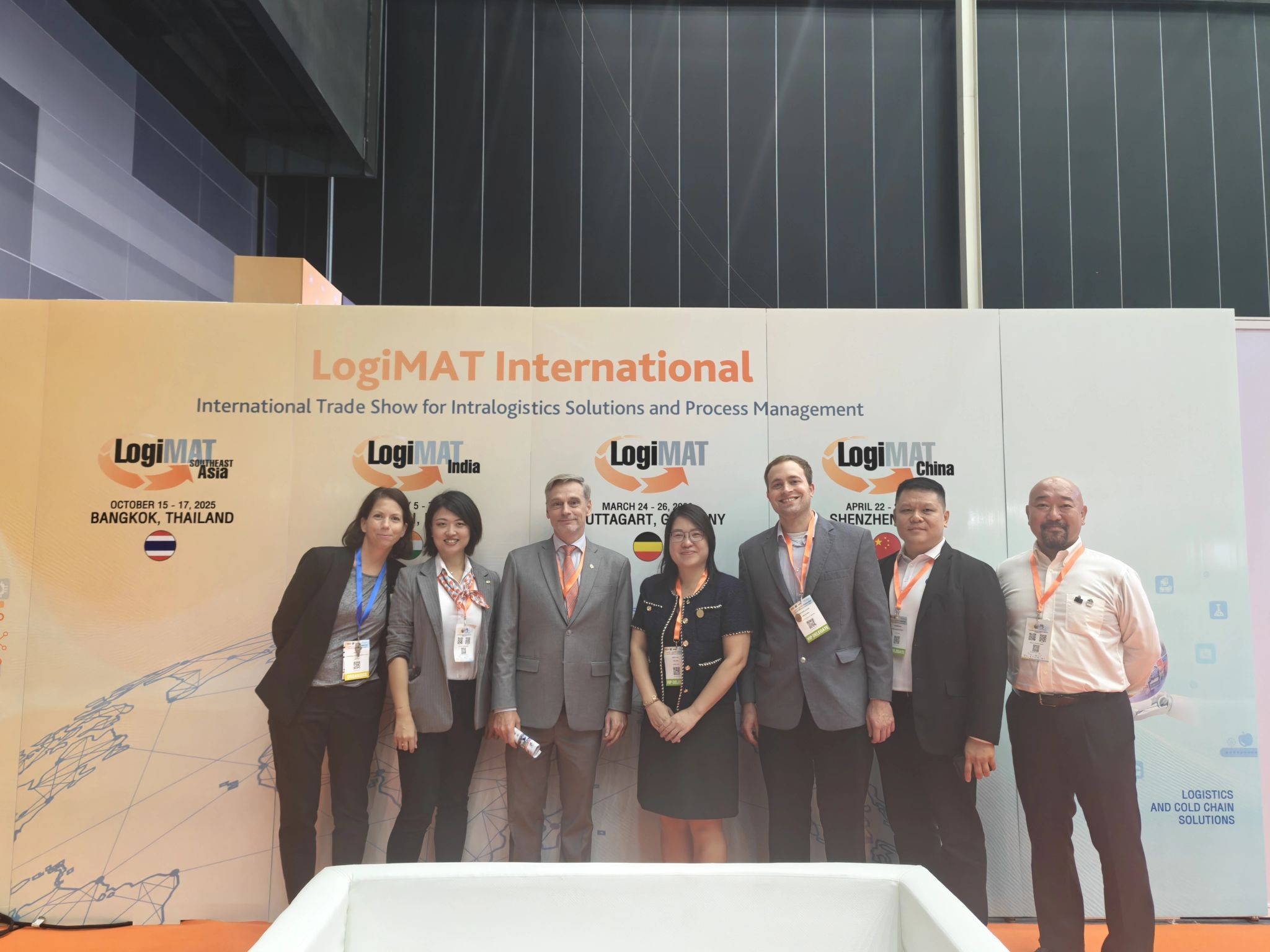
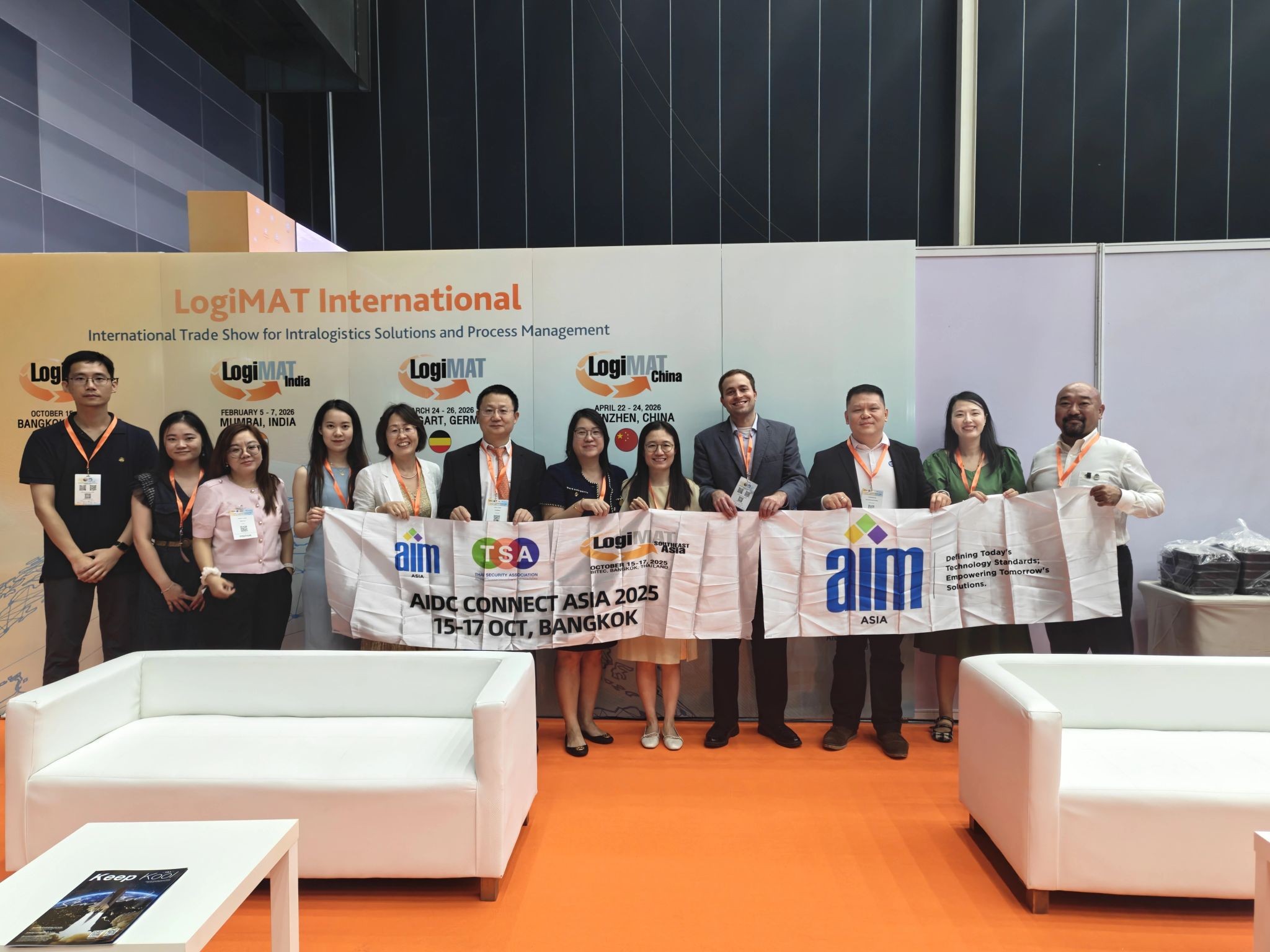
My recent trip to Bangkok, Thailand in the Asia region offered a unique opportunity to see the incredible progress being made in logistics, supply chain, and digital identification technologies. It was an honor to represent AIM Global at the AIM Asia VIP Tour and LogiMAT Southeast Asia; a premier international trade show dedicated to intralogistics solutions and process management as well as at several meetings in the area focused on learning and collaboration.

The meetings I attended started with LogiMAT Southeast Asia, which  showcased the future of supply chain innovation, from automated material handling and warehouse robotics to AI-driven logistics visibility and digital transformation tools. The event brought together leaders from across Asia and beyond to explore solutions that optimize speed, accuracy, and sustainability in modern logistics networks.

The AIM Asia delegation was warmly received by the event organizers and key regional leaders. We had the privilege of joining guided tours, meeting with solution providers, and learning about new advances in smart warehousing, AI-powered systems, and connected supply chain infrastructures that align with AIM’s mission to enable trusted, interoperable data capture and identification worldwide.

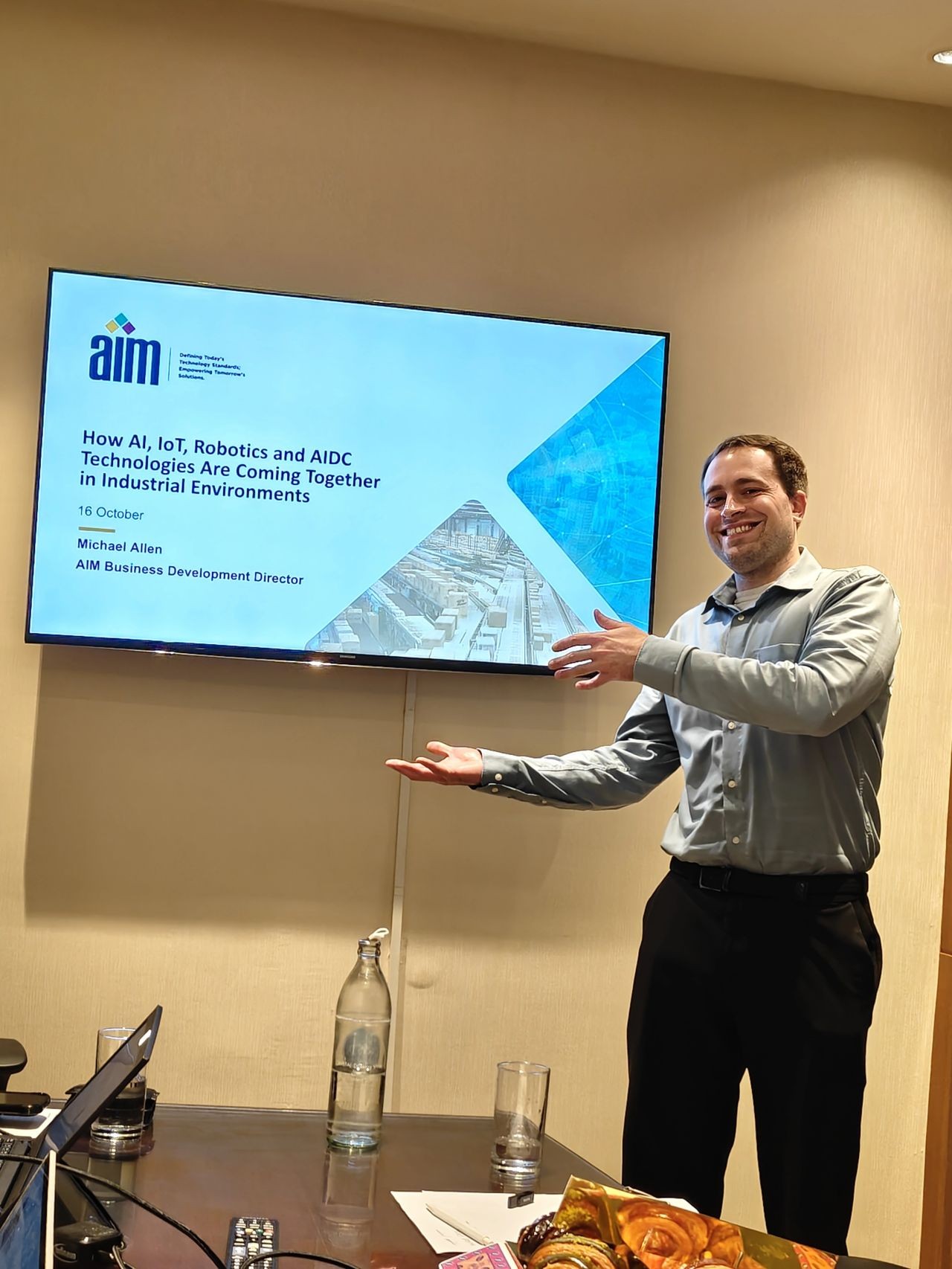
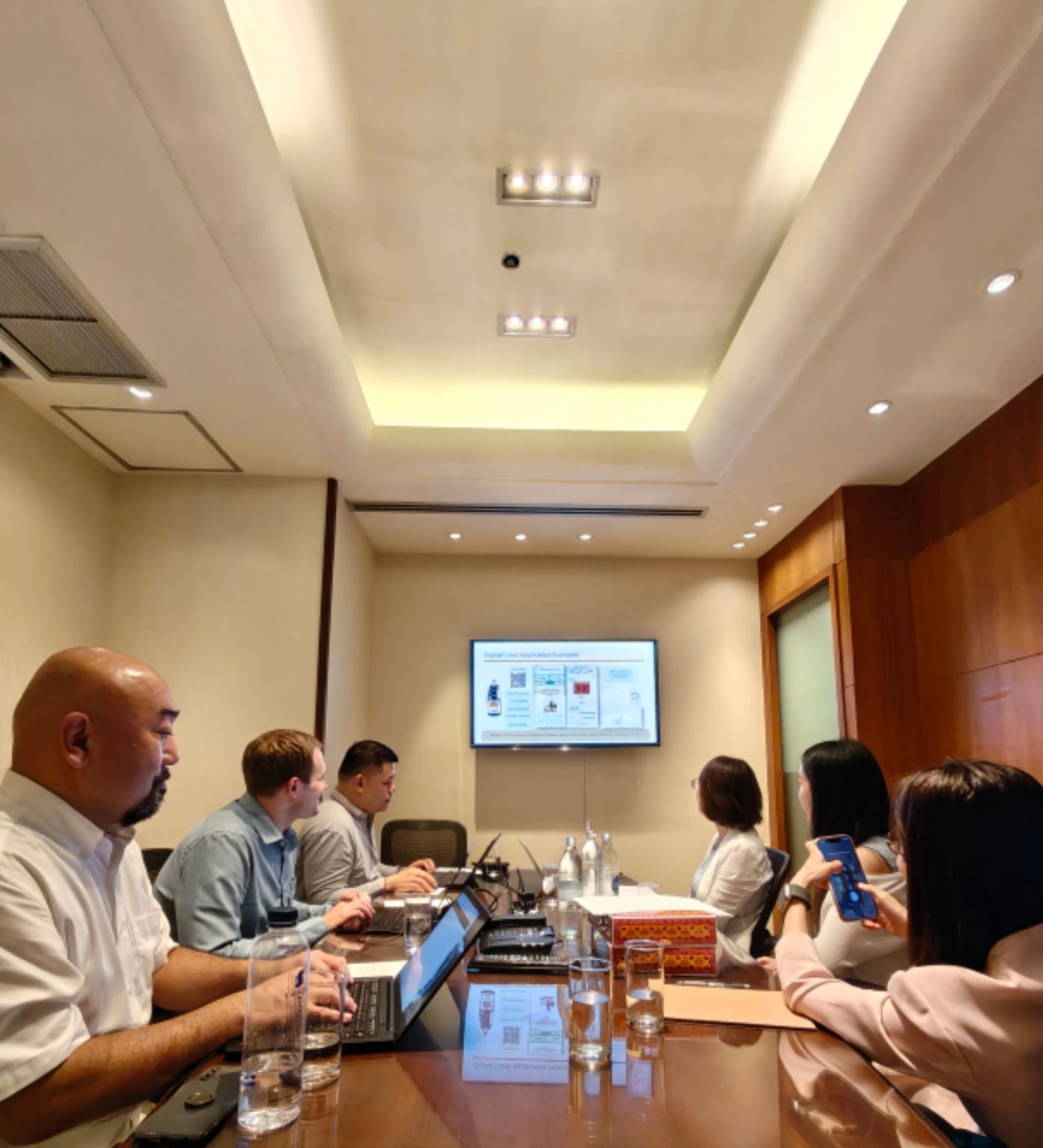
The next day, I was a part of a board meeting hosted by AIM Asia, where I had the opportunity to present on “How AI, IoT, Robotics and AIDC Technologies Are Coming Together in Industrial Environments.” The discussion centered on how Artificial Intelligence, the Internet of Things, Robotics, and automated data capture tools including  barcodes, RFID, RTLS, and machine vision, are rapidly converging to create smarter, more responsive industrial systems

Some key discussion points were:

  • Technology convergence is driving measurable efficiency gains, cost reductions, and improved quality across operations.
  • AI and IoT depend on accurate, standardized data from AIDC technologies to make reliable decisions.
  • Autonomous robots and AI-driven workflows are reshaping warehouse and manufacturing environments, with smart robots projected to outnumber frontline workers by 2028.
  • Data visibility and product authentication remain central to enabling traceability and regulatory compliance.

Our board meeting also featured excellent discussions around product identification, the future of 2D codes, and further talk on product transparency, particularly how regional collaboration can accelerate global interoperability and the adoption of standards for Digital Product Passports (DPPs), Unique Device Identification (UDI), and smart labeling systems.

Later that day we had a great meeting at the HIP Global Office where we heard from their Executive Director Mr. Thaweechai Yang, who also is the President of the Thai Security Systems Operators Association.  This meeting ofr me highlighted the power of cross-regional collaboration in advancing the effective uses of identification technlogies. I extend my sincere appreciation to the organizers of LogiMAT Southeast Asia, as well as Mr. Yang and his team for their warm hospitality.

I would also like to express my deep gratitude to:

  • Dr. Pui Yi (Anna) Lau, President of AIM Asia as well as Kenneth Yung, for leading the coordination of the tour and facilitating valuable regional engagement.
  • Masaki Ehara, President of AIM Japan, for his partnership and meaningful dialogue throughout the event.
  • Yaw Peng, NG, and our colleagues from AIM and GS1 China, for their hospitality, guidance, and thoughtful discussions on regional innovation and standardization efforts.

This trip reinforced the growing importance of international cooperation in building a more transparent, data-driven future. As technologies continue to converge, AIM’s role in fostering standards, trust, and interoperability will remain essential to connecting technologies, and people, across borders.

Together with our chapters leadership and our global network, we are laying the foundation for a more visible, intelligent, and sustainable supply chain ecosystem.

Driving Standards, Innovation, and Growth : AIM’s Q3 Chapter Call Recap

AIM held its quarterly global chapter call on September 24, 2025, bringing together leaders and members from across regions to exchange updates, share progress, and identify opportunities for collaboration.

AIM Germany, Austria & Switzerland

Peter Altes reported on ongoing regulatory and policy initiatives, including the EU Digital Product Passport, Cyber Resilience Act, and Frequency Harmonization. He highlighted AIM’s sponsorship of Wireless IoT Tomorrow in Wiesbaden this October and upcoming preparations for LogiMAT 2026 in Stuttgart. AIM Germany is also preparing its spring meeting, which will include board elections. Even with broader economic uncertainty globally, outreach through new channels, including a LinkedIn company page and a website relaunch, is underway and helping create new contacts and dialogue across the region.

AIM Russia

Michael Allen provided an update from Gregory Slusarenko. AIM Russia continues to serve as a hub for innovation, representing 19 member companies across the AIDC spectrum. Two new national standards were approved in 2025, covering 2D barcode verifiers and RFID supply chain applications.  These align Russian standards more closely with global frameworks. AIM Russia is also actively involved in national traceability initiatives alongside GS1 Russia, supporting implementation with training and consultation.

AIM North America (NA)

AIM CEO Mary Lou Bosco shared that AIM NA recently welcomed five new members. The team has been highly active at industry events, including GS1 US Connect, BlueStar and ScanSource partner conferences, and is preparing for AIM activities at PACK EXPO Las Vegas. Work groups continue to drive thought leadership, with the Cannabis Work Group launching a podcast and the Food Supply Chain Work Group preparing a December webinar on AI applications in food. A survey on 2D barcode adoption in food traceability is also underway. Also involving food, AIM NA recently produced a video campaign for the International Day of Awareness of Food Loss and Waste.

AIM Japan

Masaki Ehara reported on recent exhibitions in Japan, noting a visible presence from Chinese companies and highlighting the strong promotion of QR code’s 30th anniversary through NHK media coverage. AIM Japan also celebrated presenting the AIM Lifetime Achievement Award to Masahiro Hara of DENSO, inventor of the QR Code. Discussions are ongoing with universities and partners to address EMC/RF interference challenges and explore future white paper opportunities.

AIM Asia

Anna Lau detailed AIM Asia’s busy third quarter, including work group meetings on EMC/RF, three webinars on smart retail, dual-frequency RFID, and healthcare testing standards, and participation in the Shenzhen IoT Show, where AIM Asia signed new MOUs with partners in Malaysia and China. Preparations are underway for AIDC Connect Asia in Bangkok, which will feature board meetings, technical work group discussions, company visits, and joint programming with LogiMAT Asia.

AIM Global

Michael Allen and Mary Lou Bosco outlined global initiatives. AIM’s industry groups are developing interactive web-based resources on RFID, visibility technologies, and supply chain applications. The Technical Symbology Committee (TSC) is advancing Ultracode standardization and raising awareness of new calibration card standards. AIM Global also hosted a widely attended QR Code phishing awareness webinar, and continues to address the opportunities around 2D codes moving forward.

Mary Lou further highlighted AIM’s submission of comments on the Digital Product Passport via DIN, upcoming recognition of five industry award recipients, and the release of the 2025 Industry Direction Report, available free to AIM members. Two global surveys, on tariffs and regulatory impacts, remain open until October 31, 2025.


Finally, the call looked ahead to AIDC 101/102 training workshops, which are expanding hands-on learning opportunities, and to the AIM Summit 2026, with chapters invited to suggest potential co-location events in Europe or Asia.


Contact AIM Chapters Liaison Michael Allen for any questions you have on chapter initiatives.


Study Affirms Barcodes Still Hold a Significant Place in a Digital World

Despite the buzz around AI and IoT emerging to drive smart supply chains and worldwide track-and-trace capability, barcode technology remains the backbone of enterprise visibility.

AIM’s 2025 Industry Direction Report found that enterprise technology buyers consider barcodes essential to traceability and they will remain so even as other technology implementations expand. Barcode systems ranked as the second-most likely area for technology investment by end users over the next 12–18 months, just behind sensor technology, and ahead of AI solutions for industrial environments and a long list of other enterprise technology investment options studied.

So why do barcodes continue to perform well while trendier innovations have come to market?

It is likely because barcodes offer a combination of affordability, global standardization and proven utility across countless industries, from healthcare, retail, logistics and manufacturing, just to name a few. Enterprise spending plans suggest barcode systems are considered foundational, not replaceable. While AI and IoT systems often require major infrastructure changes, barcodes plug directly into existing workflows and deliver value immediately. They are familiar and work in a plethora of settings.

One of the biggest trends uncovered in the report is the increasing demand for mobile barcode systems. From handheld scanners to mobile-enabled apps, companies are equipping frontline workers with tools that increase flexibility and reduce operational friction. This mobile-first push is particularly strong in warehouse and logistics environments, where agility is key. Valued for their accuracy and familiarity factors, barcode systems remain a first-line solution for many visibility challenges.  Current and pending regulations are also supporting the continued demand for barcode systems. 

Regulatory and industry mandates like the Digital Product Passport (DPP) in Europe, the FDA’s Food Safety Modernization Act (FSMA), and the GS1 Sunrise 2027 initiative are pushing organizations to revisit their labeling and identification infrastructure. For many, this means upgrading to more robust barcode systems, including 2D barcodes and mobile-friendly formats like QR Codes and Data Matrix symbols.

Traceability requirements give barcodes a valuable role and purpose. When paired with smart label materials or serialization tools, barcodes become vital data carriers in an increasingly transparent supply chain.

Perhaps most importantly, the report reveals how barcode technology is not in competition with newer technologies; they are becoming complementary assets. Barcodes are often the first layer of data capture in environments that later integrate RFID, IoT or AI-based analytics. In other words, barcodes in some settings are a foundational tool for digital transformation.

The research done by AIM is showing that barcode technology is not being left behind.  It is being reimagined, mobilized and integrated into the future of enterprise operations.

 Want to see the full investment trends data and analysis?

Download the full 2025 AIM Industry Direction Report and get the data behind the insights.


AIM Releases Industry Direction Report for 2025 – 2026

AIM Releases Industry Direction Report for 2025 – 2026

Pittsburgh, PA, September 3, 2025 AIM Global, the leading international industry association, global authority and resource in automatic identification and data capture (AIDC) technologies and innovations including barcode, biometrics, IoT, NFC, RFID, RTLS, and RAIN, releases its AIDC Industry Direction Report forecasting global industry sales and purchasing expectations of solutions providers and customers across multiple vertical markets.

AIDC technologies have a clear path for growth at a time when other enterprise technology priorities are shifting and business confidence is fragile. Motivation to become more responsive and to protect against supply chain disruption has enterprises exploring many digitalization strategies. Patti Blessing, AIM Board Vice Chair and Senior Sales Manager, RFID Retail and Hospitality for Zebra Technologies, shared: “The insights in this report can help business leaders decide which technologies are most relevant to their companies by demonstrating how others are starting to apply them today.”

The global technology landscape is undergoing significant shifts, propelled by fast-moving innovations in technologies. Organizations are actively exploring how they can integrate artificial intelligence (AI), Internet of Things (IoT), robotics, vision, 5G and other advanced automation capabilities into their IT, manufacturing, supply chain, and customer service operations, which is resulting in difficult decisions as leaders look for budgets to cut to help fund new digitalization programs.

“Backed by in-depth research and expert analysis, this report empowers industry leaders with actionable intelligence for strategic planning and competitive advantage. AIM remains committed to collaborating with stakeholders, regulators, and standards organizations to bolster supply chains, achieve market access, and drive innovation. Our industry stands ready to continue powering these technologies of today and tomorrow,” expressed Mary Lou Bosco, CEO, AIM Global. The AIM Industry Direction Report is available free to AIM and AIM Chapter Members by contacting AIM. Non-members may purchase a copy for a nominal fee. For more information, please visit here.